Tom Maxwell | Longreads | March 2017 | 9 minutes (2,170 words)
On March 18, 1845, the Hutchinson Family Singers were huddled in a Manhattan boarding house, afraid for their lives. As 19th Century rock stars, they didn’t fear the next night’s sellout crowd, but rather the threat of a mob. For the first time, the group had decided to include their most fierce anti-slavery song into a public program, and the response was swift. Local Democratic and Whig papers issued dire warnings and suggested possible violence. It was rumored that dozens of demonstrators had bought tickets and were coming armed with “brickbats and other missiles.”
“Even our most warm and enthusiastic friends among the abolitionists took alarm,” remembered Abby Hutchinson, and “begged that we might omit the song, as they did not wish to see us get killed.”
It wasn’t that most people didn’t know the Hutchinsons were…
“Poor boy! I never knew you, yet I think I could not refuse this moment to die for you, if that would save you.”―Walt Whitman
John Van Der Ipe Quick, circa-1865 albumen carte de visite copy of an earlier daguerreotype. Ann Longmore-Etheridge Collection.
The carte de visite (CDV) shows the young and almost impossibly handsome John Van Der Ipe Quick, born 27 August, 1829, in Lodi, Seneca County, New York, northwest of Ithaca. The CDV is a copy of an daguerreotype that was taken in about 1850, probably when he reached the age of 18.
John’s parents were farmer and Reformed Dutch Church member Christopher Quick and his wife Ellen Van Der Ipe, who was the daughter of John Van Der Ipe and Harriet Ten Eyck. Christopher Quick was born in South Branch, Somerset County, New Jersey, 14 August, 1798, to Abraham Quick (1766-1819) and Catherine Christopher Beekman (1766-1848). Abraham Quick, was, in turn, the son of farmer and Revolutionary War soldier Joachim Quick (1734-1816), who had been born in Harlingen, Somerset County, New Jersey, 22 July, 1734. His tombstone can be found in Harlingen Reformed Church Cemetery, Belle Mead, New Jersey. His wife, John’s great-grandmother, was Catherine Snedeker (1739-1815).
The final resting place of Joachim Quick, Revolutionary War soldier and John Quick’s great grandfather.
The gravestone of Abraham Quick, John Quick’s grandfather.
John’s father Christopher’s union with Ellen Van Der Ipe, who was born 3 November, 1798, in Neshanic, Somerset County, resulted in three daughters: Harriet Ten Eyck Quick, born 30 November, 1822; Maria (b. 1825, died young); and Catherine (b. 1827). After John arrived two more sons followed: Abram, born in 1832, and James, born in 1838. But the Quicks soon may have felt this verse from Job spoke to them most particularly: “Naked I came from my mother’s womb; naked I will return there. The Lord has given; the Lord has taken; bless the Lord’s name.”
The 1840s began pleasantly. Eldest daughter Harriet married Cornelius Peterson (b. 1823) on 8 December, 1841. Tragedy struck hard, however, when paterfamilias Christopher Quick died at age 44 on 9 January, 1842. At that time, the recorder of deaths at the Farmville Reformed Dutch Church had the habit of noting a biblical verse by the name of each entry; for Christopher Quick, he chose Mathew 6:10, “Thy kingdom come, Thy will be done in earth, as it is in heaven.”
Christopher was buried in Lake View Cemetery, Interlaken, Seneca County, New York. In his Will, he bequeathed each of his children $100. His wife was left in charge of his property until his youngest child turned 21, then his estate was to be evenly divided between the children with one-third for his widow.
Harriet became pregnant at about the time of her father’s death, and her first child, a son named Christopher Quick Peterson in honor of his grandfather, was born 8 November, 1842. A life was taken and a new life given, but the cycle was far from finished: The youngest Quick, James, died 29 November, 1843, aged four years, eight months, and 15 days. (The registrar of deaths chose Isaiah 3:10: “Say ye to the righteous, that it shall be well with him: for they shall eat the fruit of their doings.”) The following year, John’s sister Harriet bore another son, Peter. In 1848, there was the birth of a third son, John Bergen Peterson, as well as the death of John’s little brother, Abram Quick, on 18 April, aged 16.
The 1850 Census enumerated the surviving Quick family in Lodi, with mother Ellen Quick running the family farm valued at $5,500. John was a laborer there, along with 14-year-old William Peterson, who may have been brother-in-law Cornelius’s younger brother. There was one more birth—that of Harriet’s son Abram, on 16 April, followed in short order by the death of John’s sister Catherine Quick on 1 October. A final Peterson child—this time a daughter named Mary, was born 1 November, 1856. (Happily, all of the Peterson children thrived and lived into the 20th century.)
A decade later, on the 1860 Census of Covert—a Seneca County town not far from Lodi—Ellen, John, and William Peterson lived with Hannibal and Maria Osborn and their children—the Quick family farm presumably sold. Osborn was a sawyer—a man who sawed wood, particularly using a pit saw, or who operated a sawmill. John and William were listed as sawyers as well, and this may have been where John’s career rested had the Civil War not removed him from his native state.
John joined the Union Army on 6 August, 1862, at age 29, for a three-year term, entering as a private in the 126th New York Infantry, according Civil War muster roll abstracts. In his enlistment records, John was described as having blue eyes, brown hair, a fair complexion, and standing 5’8″.
Harpers Ferry, where John Quick first saw battle during the Civil War.
By September 1862, John was in Harpers Ferry, Virginia (now West Virginia). On 12 September, the troops of Confederate Major General Stonewall Jackson attacked and captured the Union garrison stationed there. The muster rolls state that John surrendered to the enemy on 15 September and was paroled 16 September. The Union Army: a History of Military Affairs in the Loyal States, 1861-65, explains, “The men were immediately paroled and spent two months in camp at Chicago, Ill., awaiting notice of its exchange. As soon as notice of its exchange was received in December, it returned to Virginia, encamping during the winter at Union Mills.”
The muster rolls note that John was present during the entirety of 1863, which means that he fought at Gettysburg. According to the regimental history, “In June, 1863, [the 126th] joined the Army of the Potomac, and was placed in Willard’s Brigade, Alex. Hays’ (3d) division, 2nd corps, with which it marched to Gettysburg, where the regiment won honorable distinction, capturing 5 stands of colors in that battle. Col. Willard, the brigade commander, being killed there, Col. Sherrill succeeded him, only to meet the same fate, while in the regiment the casualties amounted to 40 killed, 181 wounded and 10 missing.”
A monument to the 126th can be seen at Gettysburg today. In part, it reads: “The regiment was in position two hundred yards at the left, July 2 until 7 p.m., when the brigade was conducted thirteen hundred yards farther to the left and the regiment with the 111th N.Y. and 125th N.Y., charged the enemy in the swale, near the source of Plum Run, driving them there from and advancing one hundred and seventy-five yards beyond, towards the Emmitsburg Road, to a position indicated by a monument on Sickles Avenue. At dark the regiment returned to near its former position. In the afternoon of July 3rd it took this position and assisted in repulsing the charge of the enemy, capturing three stands of colors and many prisoners.”
Dead horses surround the Trostle House after the Battle of Gettysburg. Courtesy Library of Congress.
From 5 to 24 July, the 126th pursued Gen. Robert E. Lee to Manassas Gap, Virginia. By October, it was fighting in the Bristoe Campaign, followed by the battles of Brandy Station and Mile Run.
The muster rolls state that John Quick was on furlough from 6 to 16 February, 1864, presumably visiting his family in Seneca County. Once he had returned, he was promoted to corporal. His regiment had been hard hit by losses and seasoned men were being elevated to replace the dead. Returns from Fort Wood, Bedloe’s Island, New York City Harbor (where later the Statue of Liberty would be built), place John there in April 1864, where he was amongst the “enlisted men casually at post” on the 25th of that month.
Between 5 and 7 May, John fought in the Battle of the Wilderness, where the regiment lost five men, 62 were wounded, and 9 went missing. Just a few days later, he was at Spotsylvania Court House, where six died, 37 were wounded, and seven went missing.
Wounded solders after the Battle of Spotsylvania Courthouse. Courtesy National Archives.
The 126th saw further action at Totopotomy, Cold Harbor, Petersburg, Weldon Railroad, the Siege of Petersburg, and Deep Bottom. But it was at the Second Battle of Ream’s Station in Dinwiddie County, Virginia, where John’s luck ran out. According to the website for the battlefield’s preservation, “On August 24, Union II Corps moved south along the Weldon Railroad, tearing up track, preceded by Gregg’s cavalry division. On August 25, Maj. Gen. Henry Heth attacked and overran the faulty Union position at Ream’s Station, capturing 9 guns, 12 colors, and many prisoners. The old II Corps was shattered. Maj. Gen. Winfield Scott Hancock withdrew to the main Union line near the Jerusalem Plank Road, bemoaning the declining combat effectiveness of his troops.”
It appears that amongst the many prisoners taken was Corporal John Quick. The muster rolls called him “missing in action at Ream’s Station since Aug. 25 ’64.” Another notation stated, “Captured Aug. 25.” It is believed that more than 2,000 Union soldiers were taken prisoner that day. However, in the correspondence of the Ontario County Times dated three days after his supposed capture, Quick was seemingly still with his unit:
“Casualties of the 126th Regt. N. Y. S. V.
Headquarters 126th N. Y. Vols.,
Camp near Petersburg, Va. Aug. 28, 1864.
To the Times:—The following is a list of the casualties of the 126th in the [battle] of Ream’s Station, Aug. 26th:
Killed—George M. Fuller, Co. D.
Wounded—Corp’l John Quick, Co. C, face; Aaron H. Abeel, Co. E, leg; Chas. Wolverton, Co. E, neck; 1st Sergt. Cornelius Alliger, Co. I, leg.
Missing and supposed to be prisoners: Sergt. Martin McCormick, Co. B; Isaac Miller, Co. C; Alex. Wykoff, Co. C; Michael Cunningham, Co. D; Chester B. Smith, Co. E; Andrew J. Ralph, Co. G; Edgar T. Havens, Co. G; Nathan D. Beedon, Co. B; Charles H. Dunning, Co. B; Frank Dunnigan, Co. G.
None of the wounds are necessarily fatal. I have prepared this list hastily.
Yours truly,
J. H. Wilder, Capt. Comd. Regt.”
The extent of John’s face wound, and how, when, and for how long he remained in Confederate hands is unclear, although the military records all indicate that he was indeed a prisoner of war at some point. After his capture at Ream’s Station, he may have been sent to Libby Prison in the Confederate capital, Richmond. Another soldier taken that day, George E. Albee, 3rd Wisconsin Light Artillery and Company F, 36th Wisconsin Infantry, was sent there, as noted in his 1864 diary. He was eventually exchanged and lived to rejoin his family. Another captured soldier from Ream’s Station was Edward Anthony of the 3rd New York Cavalry; Anthony was also held at Libby then Andersonville Prison, and died of an unknown illness in Macon, Georgia, that September. Others captured that day ended up at Salisbury Prison in North Carolina.
The final muster roll notation was that handsome Johnny died 4 April, 1865, “of disease,” with a note appended beneath, “in Rebel prison.” However, a pension application submitted on his mother’s behalf noted that “John Quick died 4 April, 1865, at Harrisburg, Pa. (Camp Curtin) of typhoid fever and scorbutus [scurvy].”
A Federal training camp named after the Pennsylvania governor Andrew Gregg Curtin, “Over 300,000 soldiers passed through Camp Curtin, making it the largest Federal camp during the Civil War. Harrisburg’s location on major railroad lines running east and west, and north and south made it the ideal location for moving men and supplies to the armies in the field. In addition to Pennsylvania regiments, troops from Maryland, Michigan, Minnesota, New Jersey, New York, Ohio, Wisconsin, and the Regular Army used Camp Curtin. The camp and surrounding area also saw service as a supply depot, hospital and prisoner-of-war camp. At the end of the war, Camp Curtin was used as a mustering-out point for thousands of troops on their way home. It was officially closed on November 11, 1865,” states the Camp Curtin Historical Society.
Camp Curtin’s hospital was John Quick’s last stop on a long road through a terrible war. Weakened by a facial wound and a sojourn as a prisoner of war that resulted in scurvy, this brave man who had survived the carnage of countless battles and skirmishes finally succumbed, so very close to home. His death was not by a bullet or bayonet, but by a disease born of contaminated water or food. Typhoid is excruciating, with high fever and diarrhea that leads to dehydration, delirium, intestinal hemorrhage, septicemia, or diffuse peritonitis. We can only hope that John passed quickly. He was most likely rapidly buried at Camp Curtain in a grave unmarked today.
As for his mother Ellen Quick, the pension application states that “credible witnesses testify that all the property of claimant consists of the income of seven pe’ct interest on $1200. Support by son shown before and after enlistment.” John, it seems, had sent his pay home to his mother. On 13 January, 1866, Ellen was granted a pension of $8 per month, backdated to April 1865.
Four years later, Ellen was listed the 1870 census of Covert, dwelling with her son-in-law, 49-year-old retired farmer Cornelius Peterson, and her daughter Harriet. Ellen, who was then 71, was listed as having no occupation but she had real estate valued at $1,400. She died 8 August, 1878, at age 79. Harriet lived more than three decades afterward, dying 14 December, 1914.
After his tragic death, the 1850s daguerreotype—most likely the only image of John Van Der Ipe Quick in existence—was taken to a studio so that CDV copies could be made for his mother or other relatives. Never a husband and father, the image is John’s only legacy. Ω
This woman in mourning wears a large memorial brooch of gold, pearls, and black enamel with a viewing compartment for a braided hair memento. The albumen CDV, circa 1862, was taken by the studio of R. A. Lewis, 152 Chatham Street, New York City. Ann Longmore-Etheridge Collection.
“And they shall beat their swords into plowshares, and their spears into pruning hooks: nation shall not lift up sword against nation, neither shall they learn war any more.”
Avis Burr Wooster, 1/4th-plate daguerreotype, circa 1851. Ann Longmore-Etheridge Collection.
The above daguerreotype, which includes a 20th-Century handwritten note indicating it was once held in the collection of the Ossining, New York Historical Society, shows Avis Burr Wooster in about the fifty-fifth year of her life.
Avis was born on 26 May, 1796, in Southbury, New Haven County, Connecticut, in the ember glow of a hot century that had seen Connecticut change from a British colony to a sovereign state inside a new nation. By the time the Revolution exploded, Southbury was already a venerable place, having been established on land bought from the Paugusset tribe in 1659. The area remains much as it was in Avis’s day: rural, agricultural, quiet.
The Burr family’s transplantation to the New World was courtesy of Jehue Burr, born in about 1605, who sailed with Governor Winthrop to Roxbury, Massachusetts, in 1630. Jehue eventually removed to Fairfield, Connecticut, and planted the seeds of a lineage that would include the noted vice president and unfortunate dualist Aaron Burr. Avis’s line was through Jehue’s son Nathaniel (1635-1712) to Avis’s great-great-grandfather Colonel John Burr (1673-1750) to her great-grandfather Captain John Burr (1698-1752) to her grandfather of the same name and rank (1728-1771), who married Eunice Booth (abt. 1728-bef. 1786) circa 1750.
Southbury, Connecticut, from the air. Photo courtesy of the Southbury website.
Avis’s father, William Burr (23 June, 1762-28 Jan., 1841), lost his own father tragically when he was less than ten years old. According to the parish record of Stratfield, on 28 July, 1771, “Capt. John Burr, a farmer, son of…John Burr, was killed by lightning at the old Pequonnock meeting-house…. The congregation was standing in prayer. Parson Rose stopped praying, and after a pause he uttered the following words, ‘Are we all here?’ When the congregation moved out it was found that David Sherman and John Burr were dead. They were both in the prime of life, with families (the very pick of the flock). There was no rod on the steeple at that time.”
A mere five years thereafter, when the Revolution began, teenaged William Burr joined the Connecticut Militia, enlisting on 1 April, 1776. His pension files, included in the tome Revolutionary War Records of Fairfield, Connecticut, indicate that his postings were many and varied, and that he served for a time as a substitute for another man, Andrew Curtiss. One of Burr’s postings was to the “Battery at Black Rock,” or Black Rock Fort in New Haven, later Fort Nathan Hale. The Connecticut Sons of the American Revolution note, “Fort Hale is situated upon an insulated rock, two miles from the end of Long Wharf, New Haven…. The Americans [had] a battery of three guns upon this point, which greatly annoyed the enemy when landing.” Many years later, Aaron Turney of Fairfield attested that in 1779, Burr was 1st sergeant at the battery and second-in-command under Captain Jarvis. Burr appears to have left military service sometime in 1780.
The daguerreotype may have been taken to mark Pressey’s official coming of age in 1856.
Charles Wilber Pressey, 1/6th-Plate Daguerreotype, 1856. Ann Longmore-Etheridge Collection.
This gorgeous and all-but-pristine daguerreotype portrays Charles Wilber Pressey, most likely at the age of 21. Handsome, jaunty, and possessed of a fetching chapeau, the image may have been taken to reflect Pressey’s official coming of age. He was born in 7 June, 1835, in Sandown, New Hampshire. If my supposition is correct, this image can be dated to the summer of 1856.
The Presseys were New Hampshire natives, having descended from the immigrant John Pressey who arrived in Hampton, New Hampshire, in about 1650. Charles Pressey’s birthplace is in the southeast of Rockingham County, named for Sandown on England’s Isle of Wight. Today’s population is about 6,000. It was smaller in Pressey’s time, although the tranquility and introspection was most likely the same.
The most prominent structure in Sandown was the Meeting House, built by the first minister of Sandown, the Reverend Josiah Cotton, in 1774, and was a focal point for both civic and religious activities. Today, this simple, sturdy building is preserved on the National Register of Historic Places.
“While the town as a whole has been largely ignored by the outside world, its meetinghouse has gained a marked degree of notoriety. Sandown is credited by many with possessing the finest meetinghouse in New Hampshire—and there are those who would go so far as to say the finest in America,” wrote Richard Holmes in A View from Meeting House Hill. “The praise of outsiders, while always appreciated, is not the chief reason that the townspeople honor this building. To the residents of Sandown, this old building is the encapsulation of their town’s entire history, for within its walls has passed the pageant of the community’s past. For 155 years, the good men and women of Sandown gathered at this building to set their own taxes and to draft their own laws. This building was, to a great extent, the capitol of a small, semi-autonomous republic operating inside New Hampshire.”
Sandown Old Meeting House
Little is known of Charles Pressey’s father, Henry Moulton Pressey, save the barest bones. He was born 7 August, 1806, in Sandown, to Peter Pressey and Bettey Moulton. Peter Pressey died insolvent in October 1823, with debts to a long list of local citizens. Settling the estate included the sale of $280 in real estate to satistfy Peter’s creditors.
On 25 November, 1830, in Freemont, Rockingham County, Henry Pressey married Mary Ingalls (1805-1858), called “Polly.” Their first child was Mary Eliza, born in about 1833 with Charles Wilber following two years after. Another son, Albert A., was born in 1844.
The gravestone of Charles W. Pressey’s parents, Henry and Polly, at Wells Village Cemetery, Sandown, New Hampshire. Photo by D. J. Goldman.
Henry Pressey died 28 April, 1848, at the age of 41, likely of Tuberculosis (TB). Two years later, when the 1850 Census was enumerated, Charles and Albert, along with their mother, dwelt with maternal grandparents Samuel and Betsy Ingalls—both born in 1775 in New Hampshire—on a farm in Sandown. The location in 1850 of Charles’s sister Mary is not known, but neither she nor his mother Polly lived out the decade. Their lives were eaten away by TB, known then as the “White Death” and “Consumption.” Mary died 11 October, 1855, and Polly passed away 17 October, 1858. Sandwiched between those two deaths was 7 June, 1856—Charles’s 21st birthday. It is possible that the daguerreotype in my collection marks this attainment and may have been made as a gift for Polly.
To sit for his picture, Charles likely traveled to Exeter, where John Plumbe, Jr., set up a studio and school in the early 1840s. Barbara Rimkunas wrote in the “Historically Speaking” column of the Exeter News-Letter of 17 September, 2013, “In 1841, advertisements for ‘Mr. Plumbe, Professor of Photography’ began running in the Exeter News-Letter. Mr. Plumbe ‘proposes to instruct a limited number of Ladies and gentlemen in this beautiful and valuable art, who will be furnished with complete sets of the improved patent apparatus, by means of which any one may be enabled to take a likeness in an ordinary room without requiring any peculiar adjustment of the light.’ The technology must have seemed near-miraculous to many people, since Mr. Plumbe had to explain that ‘the process is simple; it requires no acquaintance with chemistry and no knowledge of drawing or painting, for the light engraves itself upon the prepared plate.’…. Exeter’s early photographers—Thomas Boutelle, George Sawyer, the Davis Brothers, and William Hobbs—set up shops all along Water Street.”
Pressey chose as his bride Clementine Wood Sleeper, a cousin and a widow one year older, who brought a young son to the marriage.
The 1860 Census, taken in July, placed Charles Pressey at a Sandown box mill, while his 16-year-old younger brother dwelt with his Ingalls grandparents on their farm. If Charles was living away from his remaining family, he would not be alone for long. His eye had alighted on a pretty cousin who had suffered a tragic blow and Charles was resolved to marry her.
Clementine Wood Sleeper was a young widow one year older. Called “Clemmie” by her family, she was born 3 April, 1834, the daughter of Joseph Gardner and Polly Pressey Wood, a paternal relation of Charles Pressey—and one of those to whom his grandfather Peter had once owed money.
News of Joseph Sleeper’s suicide was carried in multiple newspapers in the eastern United States. This is from the Baltimore Sun, 12 January, 1858. (The Sleepers lived in Sandown, not Landerin.)
In 1855, Clementine married as her first husband Joseph C. Sleeper, son of James and Sally Sleeper of Sandown. The young couple had a child, Edwin Sidney Sleeper, born in Freemont, New Hampshire, 12 November, 1856. Clementine’s husband committed suicide at the Matteson House, a high-class hotel in Chicago, Illinois, on 9 January, 1858. Why he was in that city and what drove him to his desperate act is unknown.
It is likely that Charles and Clementine had known each other all their lives—they were related and their hometown was small. Whether Charles had feelings for Clementine before or during her marriage to Joseph Sleeper is speculation, as is that a man like Charles, who had lost so many of his own family so tragically, might be drawn to comfort a grieving widow, then woo her.
However it came to pass, Clementine Sleeper married Charles Pressey on 28 November, 1860, in the town of Hampstead, which borders Sandown. Charles adopted little Edwin Sleeper as his own. For the rest of Edwin’s life he used the surname Pressey and Charles was always stated as his father, not his stepfather. Many years later, he would be listed in the 1916 Who’s Who in New England as Edwin Sidney Pressey.
“A reference to the roster of the regiment will show that it included many men who were too young to enter the service at the outbreak of hostilities, but who had since become of military age.”
Although a Charles A. Pressey served as sergeant in Company A, Regular Army 19th Infantry, a Charles O. Pressey joined Company I, Indiana 9th Infantry, and a plain Charles Pressey of Company G, 10th Maine Infantry, died during the Battle of Antietam, our Charles Wilber Pressey did not join up during the U.S. Civil War. For a Union man, conscription did not exist until the Draft Act of 1863, but even then single men were conscripted before husbands. Moreover, all drafted men could hire a substitute or pay $300 in lieu of service.
However, Charles’s brother Albert did enlist. On 26 September, 1862, at Concord, the 19-near-old became a private in Company K, 15th New Hampshire Infantry, headed by Colonel John W. Kingman, which mustered for a nine-month stint of service. Charles McGregor, company historian, noted in his Regimental History of the Fifteenth New Hampshire Volunteers, “This was the very darkest period of the war. It was the first regiment of New Hampshire’s quota in response to President Lincoln’s call for 300,000 nine months’ men. A reference to the roster of the regiment will show that it included many men who were too young to enter the service at the outbreak of hostilities, but who had since become of military age…. It is understood that the nine months’ men were raised for a special purpose—as an auxiliary to our struggling armies already in the field, and to enable them to strike the rebellion a staggering and fatal blow.”
Company K went south to Louisiana—probably as foreign a place to Sandown as Albert Pressey could have imagined. The company became part of Sherman’s Division, Department of the Gulf, and participated in the 48-day siege and military assault on Port Hudson in the the summer of 1863, which was the Union’s final engagement in the campaign to recapture the Mississippi.
The Siege of Port Hudson, Louisiana, by J. O. Davidson, Library of Congress.
After Port Hudson surrendered, the men of the 15th New Hampshire “boarded the steamer City of Madison for Cairo, Illinois, thence to Chicago,” wrote McGregor. “From Chicago and through New York, the regiment enjoyed a continuous ovation. Arrived at Concord at about noon of Saturday, the 8th, and was mustered out on the 13th of August.”
A few months later, on 26 November, Albert wed Amelia A. Moore, daughter of John and Alice Moore, in the town of Derry, near Sandown, and would spend the first part of their married lives there. The couple had a farm and a baby daughter, Mary Ann, by 1870. They would have at least five more children, but only three survived infancy—Lyndall E. (1872-1964), William M. (1874-1942), and Bertha M. (b. 1882). Later, Albert Pressey worked as a stableman in Haverhill, Massachusetts, and eventually moved to a Hampstead farm established by his son William. He received a Civil War veteran’s pension and died aged 77 on 9 August, 1920.
“The child is restless at first, but later becomes listless; the features are drawn and shrunken and the face often has the appearance of extreme age.”
In 1867, Charles and Clementine welcomed their first child, a son named Henry Mahlon Pressey, but the boy died aged one year, five months, and 17 days on 15 September, 1868. It was a horrible and heartbreaking twist of fate, and for Charles, it may have painfully echoed the death of the baby’s namesake. Little Henry’s death record states that he perished of Cholera Infantum, an acuteinfectiousenteritis where death comes after severediarrheaand vomiting leads toextremefluidandelectrolytedepletion.
The disease’s progress was described in The Eclectic Practice of Medicine with Especial Reference to the Treatment of Disease, written in 1910 by Dr. Finley Ellingwood: “The diarrhea is at first muco-purulent, soon becoming watery, and amounts to purging. The stools are voided with force, and vary in number from ten to fifty in twenty-four hours, and are alkaline in reaction. Vomiting occurs, and may soon become nearly incessant.
“The pulse is rapid and weak; the temperature taken in the rectum may be found to be as high as 105° to 106° F., while the peripheral temperature may be low. The tongue becomes red and dry; there is intense thirst. The urine is scanty or it may be suppressed. The skin has a mottled appearance from poor capillary circulation; the extremities are usually cold. The child is restless at first, but later becomes listless; the features are drawn and shrunken and the face has often the appearance of extreme age. The eyelids are but partly closed, the mouth is open, and the fontanels are depressed. Not only is prostration present from the beginning, but signs of profound toxemia are are marked. Toward the end of fatal cases the breathing is irregular and the head retracted; the temperature is sub-normal, or there may be hyperpyrexia. Death may occur in twenty-four hours.”
An unidentified mother from Canestota, New York, holding her dead infant, albumen carte de visite, circa 1875. Clementine Pressey may have sat for a similar photograph. Ann Longmore-Etheridge Collection.
Their baby was gone, but the theme of resurgence strongly marked the chapters of Charles Pressey’s life. By the 8 June enumeration of the 1870 Census there was a new son, Charles Park Pressey (b. 25 November, 1869). In 1872, the Presseys—a unit of four again—moved the short distance to Hampstead where their boy, known as Park, would thrive, where they took up farming, and where they would become established as well-respected and noted citizens.
In 1880, the census enumerated Charles and Clementine on their farm with Edwin, aged 23, and Park, aged 10. Also living with them was Clementine’s father Joseph A. Wood, aged 77; her mother Polly, aged 76; and her brother Clarence, who was aged 28 and a commercial miller.
In February 1880, there was a rare glimpse of Clementine Pressey chaperoning the town youth at a meeting of The Ladies’ Sociable where there were “various games, charades, recitations, readings, and singing,” according to A Memorial of the Town of Hampstead, New Hampshire, Vol. II, by Harriette Noyes.
During the years 1880 to 1900, Pressey was elected a member of the Trustees of Hampstead High School and after his election on 31 December, 1884, became a deacon of the Congregational Church. His company, C. W. Pressey & Co.,was a general lumber business and manufactured wooden boxes in the town from about 1872 to 1892. In 1900, he was elected a Rockingham County commissioner.
Charles made an appearance in a June 1890 court case concerning the town of Hampstead’s ability to establish a new cemetery. The New Hampshire Reports, Vol. LXVI’ssummary of Eastman v. Hampstead reveals that a four-acre lot was purchased and the deed delivered to the town. However, when the selectmen went to lay out the new cemetery they found that “across the highway, on land owned by Charles W. Pressey, one of the cemetery committee, was a dwelling-house occupied by George Wyman. Wyman had a contract with Pressey for the purchase of the house and land, and objected to the laying out of the cemetery within 20 rods [110 yards] of it. At this time, Pressey notified the selectmen of Wyman’s objection, and informed them that he could not consent to laying out the cemetery within 20 rods of the dwelling-house.”
Hampstead, New Hampshire, as the Presseys would have known it in about 1910.
The issue was resolved by paying Pressey and Wyman $100 for a release to build the graveyard no closer than ten rods to the house and the laying out progressed with lots no closer than 20 rods. The money was fronted by Selectman Josiah Eastman on behalf of the cemetery committee, but the bad blood this created became evident when the town refused to reimburse Eastman for his expense. The court ruled in Eastman’s favor, writing, “It is noted that Pressey was estopped to withhold his consent to use the land as a cemetery, and therefore the release was without consideration. This objection is not tenable. Wyman had a contract for the purchase of the Pressey land and was the equitable owner. It was Wyman, not Pressey, who objected…. There was no estoppel. The plaintiff is entitled to judgement for $100 and interest from the date of the writ.”
It is possible that the fine photo of the Pressey home was taken by Park, who was fascinated by old houses all his life.
Both Charles and Clementine’s sons were exceedingly well educated—so much so it seems Charles wanted to give them the underpinings for success he’d lost when his own father died.
Park Pressey was schooled in the public and high schools of Hampstead, as well as the Exeter Phillips Academy, a residential school founded in 1781 known for academic excellence and a distinguished faculty. Park also attended Williams College, Williamstown, Massachusetts, from which he graduated in 1893. Later in life, he became the manager of the Boston Branch of the Educational Register Company. He was the author of The Vocational Reader (Beacon Vocational Series) and a regular contributor to Youth’s Companion and St. Nicholas Magazine. Park was also an avid photographer.
This photo of the Pressey home in Hampstead was published in Harriette Noyes’s A Memorial of the Town of Hampstead, New Hampshire, Vol. I.
It is probable that the fine photograph of the Pressey home above was taken by Park, who was fascinated with old houses all his life. A local architecture scrapbook compiled by Park between 1896 and 1910 exists in the Historic Society of New England containing “well-illustrated news clippings relating to architectural and historical subjects pertaining to Boston, with some coverage of Andover, Amesbury, Salem, Bedford, Marblehead, Malden, Portsmouth, NH and other communities.”
An interior area of the Pressey’s Hampstead home photographed by Park, from the collection of the Historic Society of New England.
Park also obtained the Halliday Historic Photograph Company Collection, lauded as an “unrivaled” documentary source of old New England homes by The Bulletin of the Society for the Preservation of New England, December 1916. “Sometime after Mr. Halliday’s death in 1904 the collection of negatives came to the possession of Mr. C. Park Pressey, who has still further enlarged it. It would be difficult to overestimate the value of such a collection as this, as an astonishing number of the houses represented have been destroyed and many of these photographs are the best or only record.” The society eventually purchased the collection.
Park married late in life—in 1926 in Belmont, Massachusetts. The 1930 Census enumerated him back in Hampstead, aged 60, with his wife Anne D., aged 39, and daughter Carol Anne (1928-11 Sept. 2011), aged 1. His occupation was given as publisher and photographer.
By the late 1950s, Park devoted himself to preserving old houses and other structures, writing tracts such as Have you seen this Old House? Or Priscilla’s Quest for a Family Roof-Tree, and articles such as “Old New England Canals” in Old Time New England in 1956.
He would die in 1963 in Lynn, Massachusetts.
Park’s daughter Carol married Anthony P. DiPesa (d. 11 Nov. 2007) and had five children. She was buried in Puritan Lawn Memorial Park, Peabody, Massachusetts.
Charles Park Pressey, circa 1900.
Edwin Pressey attended district and Hampstead High schools, graduated from Williams College in 1885, and from Union Theological Seminary, New York, in 1888. He earned a Ph.D. from Illinois Wesleyan University in 1904. He authored the book History, Philosophy and Practical Use of Mental Healing in 1910. (Did his interest spring from a need to understand the suicide of his biological father?) Edwin also lectured on Biblical archeological developments. His chief recreation, he told Who’s Who, was tramping.
A sketch of Edwin S. Pressey published in the St. Paul Globe.
On 23 August, 1887, Edwin married Orrie Belle, daughter of William C. Little and Julia Harris Haseltine. The bride was a music teacher. The couple had had two children—Sidney Leavitt (b. 1888) and Julia Clementine Pressey (b. 1895).
During his early years in the ministry, Edwin served as pastor of Congregational churches at Brooklyn, New York; Springfield, Vermont; and Glenwood, Illinois. Next, he became pastor of the St. Anthony Park Congregational Church in St. Paul, Minnesota. The 3 March, 1897, St. Paul Globe contained an article on Edwin’s installation, as well as a sketched portrait. “Last night marked an epoch in the history of [the church], which will long be remembered by the members…. The church interior was ablaze with light in honor of the occasion, and was very prettily decorated with festoons of smilax and cut flowers,” the newspaper noted. After the official service was concluded, “the evening was spent in a social way, and Rev. Pressey was given an informal welcome to his new charge.”
The years that followed were crowded with sermons, weddings, christenings, funerals, and conferences. Orrie Pressey was also deeply involved in her husband’s work. The 4 April, 1905, issue of the Minneapolis Journal noted, for example, that when the Congregational Missionary Society next met, “Mrs. Edwin Pressey and Mrs. W. Hays will speak on ‘The Ancient Religions of Japan,’ and ‘Why America is Interested in Japan.’”
“Education was the one major activity to which the country has thus far not systematically applied ingenuity to the solution of its problems.”
As Charles and Clementine had done for Edwin and Park—doubtless recognizing the brilliance of both boys—so Edwin and Orrie did for Sidney and Julia. The children were incredibly gifted. By 1910, Sidney was training to become a psychologist. (Were these the continued ripples of Joseph Sleeper’s long-ago suicide?) His 1918 draft registration stated he was a “mental test expert” in a psychiatric hospital in Boston.
Sidney Pressey was a noted professor of psychology at Ohio State University from 1921 to 1959. A cognitive psychologist, he is credited with inventing in the mid-1920s the first teaching machine, which presented students with multiple-choice questions. Sidney is quoted in a 1932 article in School and Society, “Education was the one major activity to which the country has thus far not systematically applied ingenuity to the solution of its problems;” his teaching machine was an attempt at doing so. After retiring, he continued to publish on the topic of cognitive psychology. He wrote several books, including a influential textbook Psychology and the New Education in 1937. Sidney Pressey died 1 July, 1979.
Edwin, Orrie, and Julia Pressey were enumerated in Orange, Massachusetts, in 1910 and in Belmont, Massachusetts in 1920, at which time Edwin served as pastor of the Plymouth Congregational Church. Julia graduated from Smith College, Northampton, Massachussetts, in 1918 then enrolled in the Wisconsin Library School, where she did field work in Harry Houdini’s home town of Appleton in the winter of 1922 and graduated in May of that year. On 14 October, 1924, Kansas’s Emporia Gazette noted, “A demonstration of the use of the catalog will be given by Miss Julia Pressey, head cataloguer at the Kellogg Library.”
Julia Clementine Pressey in 1918 from the Smith College yearbook.
Sometime between 1925 and 1930, Julia received a post as assistant professor of library science at the Atlanta Library School, Atlanta, Georgia. Edwin Pressey had retired and both parents moved with her there. (Later Julia would become a faculty member at Emory University.) Orrie Pressey died sometime between late 1930 and 1940 in Atlanta.
After her mother’s passing, Julia donated a quilt made by Orrie in the late 1800s to the National Museum of American History, which describes it thus: “Crazy-patched square and rectangular blocks were assembled to make Orrie Little’s Parlor Throw. The four corner blocks are made entirely of ribbons. A variety of silks, satins and velvets were used for the other blocks. The lining is a brown-and-black stripe printed fabric. The binding is made of 12 different ¾-inch ribbons, seamed to the lining and whip-stitched to the front. Embroidery is used to embellish the edges of the patches and along the bound edge.”
A crazy quilt made by Orrie Belle Little Pressey. Photo courtesy National Museum of American History.
During the war years and through the end of the decade, Julia was head of the Decimal Classification Section of the U.S. Library of Congress in Washington, D.C. Various University of Illinois alumni newsletters highlight her activities—for example, lecturing to students at a Catholic University evening class on cataloging and classification and serving as a committee member to resolve classification problems at the a national gathering of the Assembly of Librarians of the Americas.
From the end of the Second World War to the close of the 1940s, Edwin Pressey lived with his son Sidney in Columbus, Ohio, near to the university where Sidney taught. Edwin’s passing was noted in this tiny obituary that ran in the 29 November Mansfield, Ohio, News-Journal.
As for Julia, I can find little about her life during the 1950s and 1960s. She never married and died 1 July, 1976, in Pomona, California, at the age of 81.
Clementine Pressey lived long enough to see her husband’s coffin carried from their parlour to his newly dug grave in Lakeview Cemetery.
Back to the beginning now—or at least the end of the beginning.
By 1910, Charles Pressey had largely retired—the census of that year noted he performed odd jobs. His last census appearance was in 1920, when he was enumerated with Clementine in their home on Main Street in Hampstead. Charles died there 26 April, 1927, of pneumonia ten days in duration that began from a cold. He was 92.
Clementine Pressey lived long enough to see her husband’s coffin carried from their parlour to his newly dug grave in Lakeview Cemetery. She would soon join him there—surviving her husband by only three days. Clementine died 29 April, age 93, of a heart attack brought on by cold and bronchitis. She was buried beside him on 1 May.
Just as I finished this article, I located a second photo of Charles Wilber Pressey that dates to about 1903. I freely admit that my eyes filled with tears. He is older, weathered, but recognizably that handsome young man of the summer of ’56. Ω
When this daguerreotype image was captured, Annie and Harry Sourbeck had been fatherless for most of their lives.
Sarah Ann and William Henry Harrison Sourbeck, Scoville 1/6th-plate daguerreotype, circa 1850. Ann Longmore-Etheridge Collection.
Daguerreotypes were the earliest form of photography – little wood-encased miracles of light and the long exposure of silvered copper plates. Sometimes the exposures lasted more than a minute, especially in the 1840s, which were the early days of the art form. A note in the case of this image reads “Sarah Ann Sauerbeck, Henry Sauerbeck, 1850?” This guesstimate accords well with the case design, with the simple brass mat that framed the image beneath its glass cover, as well as the clothing of the Sourbeck siblings. The two would have had to be very still, looking into the empty black eye of an alien, unnerving camera for at least 30 seconds. It was almost certainly their first photograph.
Sourbeck is the correct spelling of the family name, or at least that which they used the majority of the time. Even as late as the mid-nineteenth century, spelling could be fluid with both given and surnames. Sarah Ann Sourbeck, recorded in various public records as “Annie” and sometimes “Anna” (she will be Annie within this article, to distinguish her from her mother), was born in March 1841 in Cumberland County, Pennsylvania. Her younger brother, William Henry Harrison Sourbeck, came along four years later, on 11 August, 1845, in Harrisburg, Dauphin (now Lebanon) County, Pennsylvania, a small city located on the banks of the Susquehanna River. The boy, named after the ninth president of the United States who had died the previous April, would be known by all as Harry. They were the children of Sarah Ann Collier (1804-1886) and her second husband John Sourbeck (1786-1847). When this daguerreotype was captured, they were aged about eight and five and had been fatherless for much of their lives.
Sarah Ann’s father eventually lost the hotel after using it as collateral for the bail of a friend, who promptly fled.
Sarah Ann Collier was the daughter of Jonathan (1780-1828) and Catherine Tice Collier (d. 1809). She was born in Dauphin County, Pennsylvania, to a father who was a hotelier in Upper Paxton Township. According to a descendant, he had used his children’s inheritance from their maternal grandfather to build the Millersburg Hotel, which still was operating as late as 1996. Sarah Ann’s father eventually lost the hotel after using it as collateral for the bail of a friend, who promptly fled. Collier was dead by the age of 48, passing away in March 1828 in Buffalo Township.
Sarah Collier first married Dr. Samuel Fahnestock (1803-1829). According to a letter by H. S. Bickel, pastor of the Church of God in Camp Hill, Pennsylvania, which was preserved by the family, “Mrs. Ann Nicholas of Camp Hill…said that Dr. Samuel Fahnestock’s mother was a member of the Seven Day Baptist faith, and lived at Oysters Point…. She was the mother of two boys, both physicians.” Pastor Bickel noted two daughters born to Samuel and Sarah Ann: Catherine Fahnestock, who may not have survived childhood, and Susanna (1830-1915). One of the girls, “I was told was a mute,” the Pastor wrote.
Dr. Fahnestock died of unknown causes at age 26 in 1829. His widow Sarah Ann was enumerated on the 1830 Census of East Pennsboro, Cumberland County, Pennsylvania, as heading a household three – two of whom females under the age of five. In his letter, Pastor Bickel wrote that Catherine and Susanna Fahnestock were raised by Fahnestock’s mother, but it is not known whether they were eventually sent to their grandmother out of duress or because their mother remarried and her new husband was not interested in raising step-children.
If the cause was the latter, Sarah Ann’s suitor, John Sourbeck, had reason enough. The widowed Sourbeck had 10 offspring by his marriage to Lydia Hemphill (b. 1791): Dorcas (1810-aft. 1840); Daniel E. (1812-1883); Margaret (1816-1852); Jane (1818-1841); Joseph S. (1822-1857); John (1823-1864); Adeline (1824-aft. 1900); James W. (1829-1873); and twins Elizabeth (1831-1889) and Mary (1831-1901), whose birth may have lead to Lydia’s death at the age of 42 years. Whilst his older children were married and established, in 1832 Sourbeck needed a mother for his infant twins, as well as three-year-old James, eight-year-old Adeline, nine-year-old John, 10-year-old Joseph, and 12-year-old Jane.
There may have been a connection between Sarah Ann’s father, Jonathan Collier, and John Sourbeck, who were close in age and both hoteliers, which drew the couple together. However they met, Sarah Ann Collier Fahnestock, age 28, married forty-six-year-old Sourbeck, on 2 August, 1832, and took up the position of mother to his brood. Pastor Bickel wrote that “Sourbeck kept a hotel in Camp Hill,” and a commodious inn would have provided the space the growing Sourbeck clan needed. The couple’s first child, Caroline, was born in 1834. Next came George Washington Sourbeck, born 26 February, 1837, then Annie in 1841.
Paster Bickel concluded his letter with an intriguing and somewhat snide side note: “Mrs. Nicholas doesn’t know anything of them after they removed from Camp Hill. She said that it is hardly likely that John Sourbeck’s children were baptized while they were in Camp Hill.” Whether Mrs. Nicholas referred to Sourbeck’s children by his first marriage, his second, or both, is unknown.
“His table shall be furnished with all the varieties of the season – his Bar, Beds, and every thing connected with the establishment, shall not be excelled by any in the borough.”
The family decamped from Camp Hill before 1842, when theHarrisburg City Directorycontained this notice from Sourbeck: “The undersigned respectfully announces to his friends and the public, that he has taken that well-known tavern stand, in the borough of Harrisburg, known as Franklin House, in Walnut-st., formerly kept by B. Hale. His table shall be furnished with all the varieties of the season – his Bar, Beds, and everything connected with the establishment, shall not be excelled by any in the borough. The Carriage house and Stabling are extensive and convenient, and sufficiently large to accommodate drovers. The house being situated in the centre of businesses, renders it a desirable stopping place for those having business at the Capitol of the State, as well as Jurors attending Courts; and having long been known as the keeper of several public houses in Cumberland County, he flatters himself that his old friends and customers will favor him with a call. No pains will be spared to minister to the comfort of his guests during their stay with him – he therefore respectfully solicits a share of public patronage.”
While John and Sarah Ann Sourbeck operated Franklin House, Matilda Georgia was born 21 February, 1843, and Harry was born in 1845. The pub and inn, sitting on the busy corner of Walnut and Raspberry Alley, seems to have been a bustling establishment, however, the 1844 tax rates list Sourbeck as tenant taverner – not an owner – who possessed one horse and cow. TheHarrisburg Business Directorynotes that in 1845, a baker named John O. Austin was either employed by or worked out of Franklin House; others listed in residence at the property were boot and shoemaker J. M. Awl and Jacob Brua, a printer.
“Mr. Sourbeck, who could not swim, immediately sank.”
The Sourbecks’ lives changed dramatically on 10 July, 1847. The 13 July issue of theHarrisburg Telegraph, tells the tale:
“On Saturday afternoon last, Messrs. John Sourbeck, Christian Kendig, Jonathan Novinger, and a Mr. Graham went fishing in the Susquehanna, at Dauphin, in a skiff. They had not got far into the river before the skiff ran upon a rock. In getting it off, three – Messrs. Sourbeck, Kendig, and Graham – got upon the rock, where Mr. Graham slipped, and in his endeavor to save himself, he caught hold of Mr. Sourbeck, and pulled him into the water. A struggle ensued to save themselves by the boat, which was upset in the attempt when all three were obliged to save themselves in the best way they could. Mr. Sourbeck, who could not swim, immediately sank. Mr. Graham could swim and made for shore, but sunk before he reached it. Mr. Novinger clung to the boat until he was rescued. Mr. Kendig remained on the rock until he was taken off the rock by a boat from shore. Two of the four were thus suddenly launched into eternity within a few moments after they had left their friends on an excursion, more of an amusement than a utility. Mr. Sourbeck was a man of over fifty years age, extensively known; he was keeping a public tavern at Dauphin at the time of his death. Mr. Graham, who was from Perry County, near Newport, we are informed and attached to the Engineer Corps engaged in locating the Pennsylvania Rail Road. They both left families to lament their loss.”
On 14 July, theDemocratic Unioncarried this item: “Two Men Drowned – On Saturday last, John Sourbeck of Dauphin, and Thomas Graham of Newport, Perry County, were drowned in the river at Dauphin, whilst on a fishing excursion. Sourbeck leaves a wife and fourteen children to mourn his untimely end. Graham has left a wife and three children to regret his loss. The bodies of the drowned men have been recovered.”
John Sourbeck was buried in Dauphin Cemetery, where his gravestone stands today. Inscribed upon it is this verse: “Ye friends that weep around my grave, Compose your minds to rest, Prepare with me for sudden death, And live forever blessed.”
“He was early in life necessitated to do for himself.”
After losing their paterfamilias, life immediately became difficult for the family. Just how difficult is evidenced within the 1881 History of Stark County, Ohio, edited by William Henry Perrin, which contains a short biography of George Washington Sourbeck (known as Washington or Wash), John and Sarah Ann’s eldest son.
“He was early in life necessitated to do for himself and began his career as a driver on the canal from Harrisburg to Nanticoke and Wilkesbarre. This he followed one season, when he went to Mechanicsburg and apprenticed himself in the boot and shoe trade, and remained there six years.” (The 1850 Census places Wash with Irish immigrant shoemaker Edward Lamant, his family, and apprentices.)
Sarah Ann and her youngest children also moved to Mechanicsburg. A document preserved by the family states, “Sarah Ann Sourbeck the bearer, has been an acceptable member of the Methodist Episcopal Church in Mechanicsburg, Carlisle Circuit, Baltimore Conference. Given under my hand this 11th day of September, 1849. James Watts, Preacher in charge.” If Mrs. Nicholas of Camp Hill thought there had been an earlier issue with the Sourbecks and religion, it seems to have been rectified.
It was during the family’s years in Mechanicsburg that the daguerreotype of Annie and Harry Sourbeck was made, most likely by Andrew B. Tubbs, who was active in Harrisburg in 1850, although the velvet liner of the case is not embossed with Tubbs’ name as in other surviving examples. There is no question that John Plumbe, Jr. – who was one of the earliest daguerreotypists in America, and who established galleries bearing his name in cities such as Frederick, Maryland; Portland, Maine; Ontario, Canada; and Louisville, Kentucky – operated a daguerreotype franchise in Harrisburg in the 1840s. Tubbs may have taken over the studio late in that decade.
The rarity and wonder of photographic images, even some two decades after the introduction of the daguerreotype, is evidenced in a surviving letter of 5 February, 1865, from Sarah Ann’s nephew, Emanuel H. Salada, to his aunt. His mother was Elizabeth Collier (1831-1867). (I have lightly edited this excerpt to increase readability.)
“I would inform you that I received the photograph you sent and further I was pleased very well to have it…. When I showed it to sister Amanda Hoffman, she kissed it and said, ‘She looks like mother did.’…. I would like to have my family taken and send it to you all but our place will not afford [a photographer] to stop here. But if I live till next summer I will take them to Harrisburg and have them taken. Further, I am sorry to say to you that I can’t fulfill your wish in regard of sending my mother’s picture. She never had it taken as far as I know,” Salada concluded mournfully. “I would give 20 Dollars myself for one likeness of my mother.”
“I came west with my parents in 1851 or 1852, when the Pennsylvania Railroad was not yet completed.”
Sarah Ann Sourbeck, circa 1865.
Harry Sourbeck, the tow-headed boy who looks at us suspiciously through the daguerreotype’s photographic hole in time, shared an early memory with the Alliance Weekly Review, which published a biographical item about him on 3 April, 1914. “I came west with my parents in 1851 or 1852, when the Pennsylvania Railroad was not yet completed…. I remember well the conductor calling out the first through train to Pittsburgh. It was at a place where they were loading canal boats on cars to take them over the mountains by rail.”
What seems at first to be misremembering – that Harry traveled with both parents when his father was dead – resolves with the understanding that it was Daniel, Harry’s eldest brother, more than 30 years his senior, who led the party west. Their destination was a triumvirate of villages sprung up around the Cleveland & Wellsville and Ohio & Pennsylvania railroads that would later unify into a town called Alliance.
According to Amtrak’s Great American Stations website, “At Alliance, the two railroads crossed, and to this day, any map of the area prominently displays the graceful ‘X’ that the rails create upon the landscape.”
The site continues, “In 1853 the first depot in town was constructed on the north side of the rail crossing near E. Main Street and Webb Avenue; Main Street was laid out to lead directly to the station, as city leaders recognized the potential impact that the railroad would have on their community. Old photographs show it to be … an octagonal two-story central section with a low tent roof. This portion of the station was flanked by one-story wings that featured large dormer gables trimmed in fancy bargeboard. The building appeared to be wood frame and covered in clapboard, while the windows were crowned by Tudor inspired window hoods that were in keeping with the eclectic nature of the overall design. Also on the north side adjoining the depot was a hotel and dining hall.”
Sourbeck House with a steam train at the platform.
On 12 May, 1852, Daniel Sourbeck arrived to take charge of the latter, which “became noted for famous meals throughout the length of these great thoroughfares and their connections…. Sourbeck came here at the solicitation of members of that company especially to take charge of their house. He had been engaged up to that time, in the Dry Goods trade and hotel business for a number of years in New Brighton, Pa. To the Sourbeck House, Alliance owes greatly her early fame; for the excellent manner in which the house has been managed in all its departments from his installation therein, has caused it to be spoken of far and near, and always has it been associated with the name of Alliance,” explains Stuart McKees’ Directory of 1868.
During the years in which Daniel ran the establishment it burned down once and was rebuilt of brick, and “Many noted individuals stopped at Sourbeck House, among them Louis Kossuth, the leader of the Hungarian revolution, [who] was received with honor and made a brief address in 1852, also in the same year, Gen. Winfield Scott on his way to Cleveland where he made the historic speech which lost the presidency to the Whig party in the fall,” notes The Alliance Review, published by the Alliance Historical Society.
The Review also allows us a glimpse of an age that was ugly with racism: “Mr. J. H. Sharer in his history of early Alliance tells of listening to the speeches of these men and also relates the incident when ‘Fred Douglass in company with two hundred delegates to a Free Soil convention, had stopped at the Sourbeck House in 1852 for a dinner previously ordered. Mr. Sourbeck, seeing the colored man in the dining room and not knowing he was one of the party, took steps to eject him whereupon all present arose from their seats and marched in a body to the roundhouse which stood nearby on the north side of the track and adopted a series of stinging resolutions, rebuking Mr. Sourbeck for the indignity he had heaped upon them.’”
Sourbeck House was rebuilt in brick after a fire destroyed the old wooden hotel and station.
Daniel Sourbeck’s prospering business attracted other members of the clan such as brothers John, who would shortly move on to Youngstown; James, who died in Alliance in 1873; and Wash, who rejoined his family in 1855 after a sojourn working on the rails. “[Wash] came to Alliance, and was engaged in his brother’s dining hall at the railroad depot for about one and a half years,” notes the History of Stark County, Ohio. Afterward, “He went to Youngstown and engaged at his trade for a short time when he accepted a clerkship in the Union Hotel, where he remained for two years. He purchased the passenger dining-rooms on Liberty Street, Pittsburgh, which he conducted about a year, sold out and returned to Youngstown, Ohio.”
“I glanced over my shoulder just in time to see the rear coach leaving the track.”
In 1855, Daniel Sourbeck was nearly the victim of a horrific train wreck that was widely reported in the eastern United States. According to the Friday, 31 August, Baltimore Sun, a train of five passenger cars “left Philadelphia at 10 o’clock…reached Burlington before 11 o’clock. It then stopped, waiting for the arrival of the 8 o’clock New York train from Jersey City…. After waiting for from five to ten minutes, and the New York train not appearing, the Philadelphia train went forward slowly, watching for the approach of the downward train. It had gone forward about a mile and a quarter when the New York train came in sight.” The Philadelphia train began to back up. The engineer did so at speed, not knowing that a “light pleasure wagon driven by Dr. Hannigan of Columbus, N.J., had attempted to cross the track.” The last passenger car, which at the train’s reversal became the leading car, crashed into the wagon, jumped the track, and rolled down an embankment dragging other cars with it and crushing some together.
Sourbeck was traveling on the train with a friend named Kelly from Philadelphia to New York. The engineer, Mr. Kelly claimed years later in a Pittsburgh Daily Post article, “pulled the throttle wide open, sending the light train flying backward over the road. Mr. Sourbeck remarked about the high speed and swaying motion of the cars. I glanced over my shoulder just in time to see the rear coach leaving the track and rolling over. I was just reaching for the bell cord when our own car lurched over…. When I regained my senses, I was lying beneath the body of a dead man.”
Dozens were killed and severely injured. Daniel Sourbeck was reported by the Sun to have a scalp wound. Mr. Kelly recalled that Sourbeck was “badly hurt and suffered for some time.”
Even so, Sourbeck could count himself amongst the lucky. A female passenger, Mrs. Benjamin Harvey, described the terrible scene to the Sunbury American: “She says that portions of bodies were scattered over the ground, while wounded men and women, bleeding, and some dying, were lying upon the bank, exposed to the hot sun. The leg of a man was thrown some distance from the body, while his heart and other small particles of flesh and bones were found in other directions.”
Less than a year later, on 6 December, 1856, another tragic train accident occurred, this time, literally, too close to home. There was a “collision in which the train on the C. & P. crashed into the train on the Ohio & Penn, which had not yet cleared the crossing. It was rushing along at such speed and hit with such force that the cars were pushed into the wooden station house that stood on the north side of the track and where the platform and waiting room was filled with people. Eleven were killed and twenty seriously hurt,” reported the Alliance Weekly Review.
Sourbeck House and depot around the time of the accident.
The 12 December issue of the Freemont Weekly Journal includes more details. “One of the passenger cars was thrown into the rotunda of the depot, and another into the sitting room of the Sourbeck Hotel, in which several persons were sitting. Both of these rooms were torn to pieces, and the inmates either killed or wounded.”
William H. Vincent, who was a clerk at Sourbeck House, later described the scene in a handwritten autobiography: “After coming into the public room we found one of the Pennsylvania cars – two trucks of it were in the room, four doorways were all broken down. On going outside, the platform was all broken and the bodies of seven persons were lying dead.” Vincent saw the dead bodies of his doctor and the doctor’s wife, as well. “The doctor’s body was found with his clothing around and between the front wheels of the locomotive, which was still on the track except for the two front wheels,” he wrote.
It does not appear that any of the Sourbecks were injured during this incident. The damage to the property was quickly repaired, and within a few years, Albert, Prince of Wales (later King Edward VII), would be a noted guest, as would President Abraham Lincoln whilst on his way to Washington, D.C., for his inauguration. A few years after this auspicious visit, the same rail lines would transport wounded and ill soldiers through Alliance as the Civil War raged. Amongst these soldiers would be one of the Sourbecks’ own.
“At the time of his enlistment said Sourbeck was a sound able-bodied man and free from all chills and fever.”
During the Civil War, brother John Sourbeck enlisted, fought, and ultimately died. Sourbeck joined up on 26 May, 1862, becoming a first lieutenant with the 84th Regiment, Ohio Infantry. But it was neither bullets nor cannon shot that took out John – it was tiny, hungry mosquitos.
In a pension case filed by John’s widow, Jane Griffith Sourbeck, she produced the sworn testimony of Third Sergeant Levellette Battelle of the 84th Ohio who said he was “personally acquainted with Lt. John Sourbeck when enlisted, prior to, and during his service in said organization. At the time of his enlistment said Sourbeck was a sound able-bodied man and free from all chills and fever. In Cumberland, MD, in July 1862, said Sourbeck took sick with chills and fever caused by being exposed…to a malarial climate. During the rest of his service, he had several attacks of chills and fever and was at the time disabled from service on that account.”
An affidavit filed by Dr. Frederick Whistler concludes John’s story: “[He was] discharged from service in the fall of 1862 …. He continued to suffer with chills and fever until he died of a congestive chill April 30, 1864. From the time of his discharge until his death, I saw him frequently each month, knew he suffered from said disability during that time by observing his symptoms and hearing his complaints. I was with him and saw him about two hours before he died.”
John Sourbeck was buried in Oak Hill Cemetery in Youngstown, Mahoning County, Ohio. Much like his father before him, John left many children behind, including an infant not yet one year old. His wife Jane never remarried. During her final years, she lived on Oak Street in Youngstown, dying 5 January, 1901.
“He was of a wandering disposition and has not been heard from since 1896.”
Unlike some of her male relatives, little exists to fill out the character of Annie Sourbeck Gray. We have a photo of her taken in the 1870s and we know the Grays would have three children together: Mary E. (b.1857); Louis Henry (1859-1945); and Margaret Anna (1864-1927). By 1861, they had left Alliance for Pittsburgh, Pennsylvania, and remained there through the 1870 Census. They lived in Brewster, Barnstable County, Massachusetts, by 1900, when they were enumerated in the household of Annie’s sister Matilda Sourbeck Crosby. At that time, Theodore Gray stated his occupation as “day laborer” – surely a harsh job for a 65-year-old man. It was in Brewster with his wife and in-laws that Theodore died at age 67 on 2 August, 1902.
Annie Sourbeck Gray, circa 1872.
On 17 February, 1887, Annie’s daughter Margaret married Edwards Cranston Brooks (8 November 1860-12 January, 1922), who was a West Point graduate and commissioned cavalry officer. In 1898, he was sent to Santiago, Cuba, for the duration of the Spanish-American War, and because of meritorious service received a brevet U.S. Army captainship. In 1900, he served as auditor for the Island of Cuba. This information comes from Genealogies of Rhode Island Families, Vol. I, which also includes this amusing comment about one of Brooks’ cousins, George Williams: “He went to Oregon with his father and other members of his family in 1851, but he was of a wandering disposition and has not been heard from since 1896.”
Annie and Theodore Gray’s son, Louis, became the president of the L. H. Gray Steamship Company and later the head of Associate Charters, a railroad freight shipping venture. He was a successful businessman who married Halcon L. Robertson on 4 October, 1893, in Cook, Illinois. In 1900, the census places him in Seattle, Washington, where he remained for the rest of his life, dying at age 85. The couple had no children.
After Theodore Gray’s death, Annie Sourbeck appears on the 1910 Census in Ward 3 of the District of Columbia, dwelling with her daughter Margaret Gray Brooks and two granddaughters. She lived until 1920, dying in East Brewster, Massachusetts, in August of that year.
“Happy, oh happy may you ever be, And be you blessed in Immortality.”
Sarah Ann in the 1870s.
By 1870, Sarah Ann Sourbeck had moved to Chicago’s 4th Ward. A picture exists of her in taken that decade in which she appears a relatively well-heeled, silver-haired widow. That her sons and stepsons provided for her is certain if the discretionary income of Daniel Sourbeck is any evidence. The Stark County Democrat reported on 7 August, 1873, that he had gone to New York and “bought a fine Specimen of Darwin’s ancestry which came duly to hand, in a fit condition for burial, accompanied by $10.00 express charges. If [Sourbeck] were not a Christian, we would expect to hear that he had become profane. The Express Company has not got the ten dollars, but then it can have the monkey.”
Sarah Ann Sourbeck remained in Chicago until her death, 9 April, 1886, aged 82 years, one month. The funeral took place at the home of her son Wash on 11 April, followed by her burial in Alliance City Cemetery. Wash would follow her to the family plot on 26 June, 1891.
There exists an acrostic dated 23 July, 1838, which proclaims itself as “a token of respect” to Sarah Ann from soi-disant poet James Fitzpatrick of Cumberland County, Pennsylvania. The lines that Fitzpatrick wrote to match her first name are apt by which to bid her farewell:
“Sweetest of bliss shall thy pure bosom know; And flowers of Beauty on thy pathway grow; Refulgent jewels shall thy brow adorn, As pure and radiant as the star of morn; Happy, oh happy may you ever be, And be you blessed in Immortality, Ne’er fading flowers on thy path shall grow, Nor ever sorrow will thy bosom know….”
Funeral notice for Sarah Ann Sourbeck.
His wife’s surname was Reeves, and a family story says she came from a banking family, but her first name remains stubbornly unknown.
Harry Sourbeck was schooled in Alliance “until I was 14 years of age, and started firing when not quite 15,” Harry told the Alliance Review in 1913. “I was promoted to engineer at the age of 19, in the year 1864. The first thing I did was on a steam car, built on Massillion, Ohio, and the first engine I ran was an 18-ton engine, with one pair of drivers and a wood burner, the cylinders set halfway back of the boiler.”
Harry did not join up during the Civil War, possibly because his railway position was considered essential by the Union. Near the end of the war, in 1865, he told the Review, “I was transferred to New Castle, PA, to run a construction train in building the Lawrence Branch Road from New Castle to Youngstown on the Pennsylvania Lines.” According to the Locomotive Engineer’ Monthly Journal, “He ran the first engine that ever went into Youngstown of the Pennsylvania lines.”
Harry Sourbeck married for the first time in the late 1860s. His wife’s surname was Reeves, and a family story says she came from a banking family, but her first name remains stubbornly unknown. Harry had by her a son, Franklin William, born 25 September, 1869, in Sharpsville, Mercer County, Pennsylvania, and who died 21 November, 1917, in the State Epileptic Hospital in Gallipolis, Ohio, after spending a lifetime in Alliance as a telegraph operator for the Pennsylvania Railway Company.
Frank Sourbeck married an Alliance native, Laura May Moyer (1874-1961), on 17 December, 1890, and with her, he gave his father four grandchildren: Harry Lloyd (1891-1964), Pearl Marie (1892-1983), Floyd Maurice (1897-1978), and Margaret May Sourbeck (1903-1986).
Frank and Laura Sourbeck
In addition to his railway career, Harry Sourbeck also co-owned several retail shops. He and his brother-in-law Thomas Clark Moore ran a business together at Irving House, located at Conneaut Lake Park, northwest of Pittsburgh. The building housed Sourbeck & Clark, probably a hardware store, according to an interview with a relative. There was also Sourbeck & Moore, also probably a hardware store, in Alliance. In addition, Harry owned the lots on what is now Wayne Street, Alliance, upon which he built homes, including his own dwelling at number 231.
After the breakup of his first marriage or the death of his spouse – we don’t know which of these occurred –Harry Sourbeck married Lydia D. Robinson (1861–1912) on 1 May, 1878, in Alliance at the home of the bride’s father, George Robinson. They went on to have three daughters: Bertha Eliza (1874 – 1963), Flora E. (1879 – 1919), and Fannie Helen Crosby Sourbeck (1895 – 1973).
Willie Donovan was frequently sent upstairs to have Mrs. Sourbeck cash large bills for the barkeep.
While this article may stand perilously close to being retitled “Daniel Sourbeck, Man Around Town,” there is one anecdote left to share about this colorful chap in his old age. In 1882, the Pittsburgh Post-Gazette reported, “The community was startled on Friday night on becoming aware that Dan Sourbeck had been robbed of $600…. Some years ago, Mr. Sourbeck lost $10,000 in the Alliance Bank, since which time he, and especially Mrs. Sourbeck, lost confidence in banks and concluded to be their own bankers, and hoarded their surplus cash in a trunk in Mrs. Sourbeck’s private room.”
A boy named Willie Donovan, who was employed by the Sourbecks, was frequently sent upstairs to have Mrs. Sourbeck cash large bills for the barkeep and thusly “became aware that there was a handsome depository in the house.” One day, Donovan was sent to Mrs. Sourbeck’s room to light a fire and stayed longer than usual. He told his employers that this was because the fire would not properly light. A few days later, the Sourbeck’s granddaughter Sophia discovered that money had been taken from the trunk. Unfortunately for Donovan, it had already been noticed that he was “quite flash with cash” and had bought a new suit, a watch, and other valuables. When questioned by the police and Sourbeck, he convinced them that he had been put up to the theft by Sourbeck’s neighbor, Olie Clark. Both Donovan and Clark were arrested for the crime.
The article concludes with Sourbeck reflecting that one of the two keys to his money drawer had gone missing some time before “and on several occasions [he] missed money from the drawer. A number of cigars were also stolen out of a case, all of which he attributes to the faithlessness of the boy in hoc.”
Sourbeck died 14 November, 1883, at 71 years of age, leaving the entirety of his estate, minus small bequeaths, to his wife Eliza, who outlived him by only a year. Both are buried at Grove Cemetery, New Brighton, Pennsylvania.
“Engineer W. H. Sourbeck was not at his post nor on the engine.”
On 6 November, 1898, a newspaper of no less gravitas than The New York Times ran the following story: “Joseph Desmond, Fireman on a Pittsburg, Fort Wayne and Chicago locomotive, drawing a fast passenger train last night near Columbiana, Ohio, suddenly discovered that Engineer W. H. Sourbeck was not at his post or on the engine. The train was running at a high rate of speed at the time. The fireman promptly shut off steam and stopped the train. Conductor Holloway ordered the train run back, and Engineer Sourbeck was found lying unconscious beside the track with his skull badly fractured. His injuries will likely prove fatal. It is thought that he climbed out on the running board and, losing his balance, fell to the ground.”
The Pittsburgh Press’s article ran on page one under the headline “He May Recover.” It reported that after Fireman Desmond had stopped the train and calmed the passengers, a search party was organized to find Sourbeck. “For several hours the mystery remained unsolved, but finally the crew of a freight train found the missing engineer among some trees, 50 yards from the railroad track.”
Harry Sourbeck in the 1890s.
Sourbeck suffered a fractured skull, a broken breastbone, and an injured spine. After a period of unconsciousness, he awoke, but could not explain what happened. Later, his memory returned and he told the Press reporter that he was leaning from his cab window, oiling machinery when he lost his balance and tumbled from the train.
Years later, the Locomotive Engineer’ Monthly of January 1914 would write that the accident “did not amount to much.” It certainly did not dim his love of the railroad. The Journal noted that when Harry retired he was the oldest engineer on the lines west of Pittsburgh and that there was no one left in any department who had been there when he had begun. He received a pension in January 1914, by which time he had a permanently injured hand and impaired hearing. But when interviewed, he “still appeared fit, agile, and strong…and would like to live until he was 100 years old to see the great changes to come on the railroads.”
Harry’s wife, Lydia Robinson Sourbeck, passed away a few years before his retirement, on 6 September, 1912, in the 34th year of their marriage. Harry, now a stately silver-haired man, would live on in the city with his youngest daughter, Fanny. He continued to travel to by rail, telling the Journal that “‘By sand, it’s the happiest day of life; it’s just like going out on a lark…. [A]fter riding in the cab for over a century I’m going to ride the velvet instead of the leather.’” That publication notes that he had recently returned from a rail trip to Florida, where he had made the short crossing by boat to Havana, Cuba.
Harry Sourbeck died at Suburban General Hospital on 13 September, 1930, of pneumonia, age 85. He was buried on 15 September at Union Dale Cemetery, Allegheny County. Ω
Harry Sourbeck in the 1910s.
This article would not have been possible without the research of Dale Alan Sourbeck into his family’s history. I also thank him humbly for allowing me to use the photos of the family he has has meticulously collected.
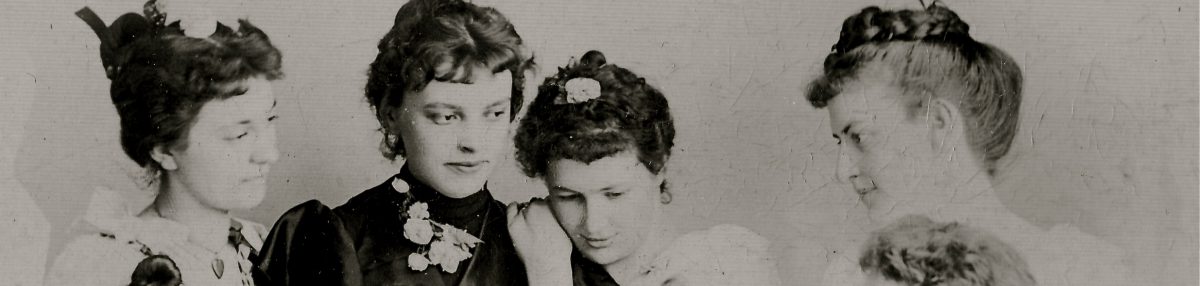


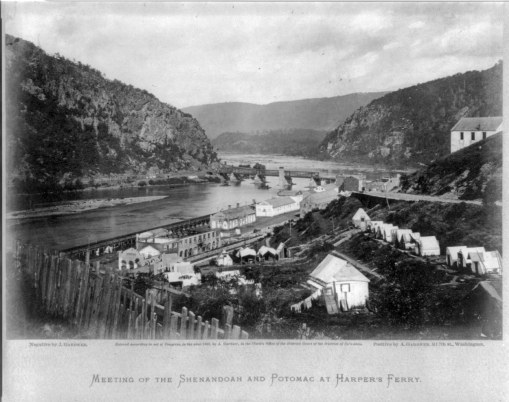


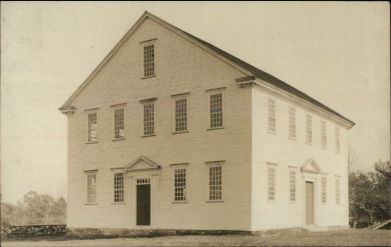
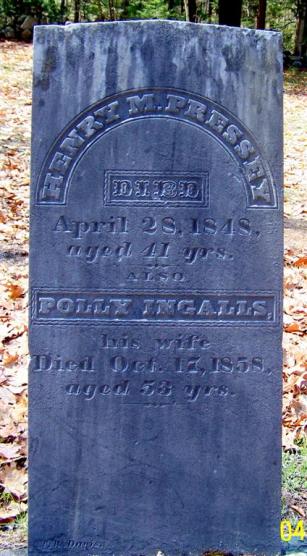


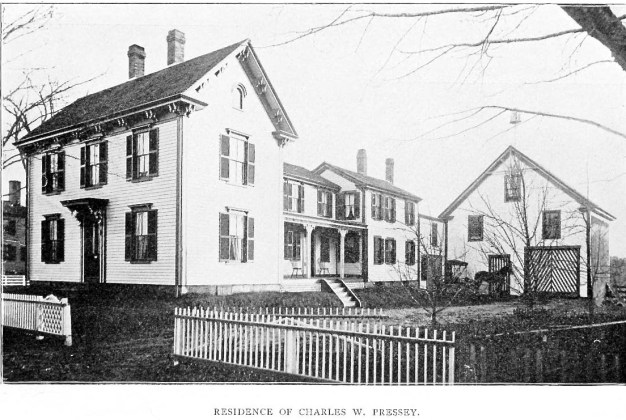
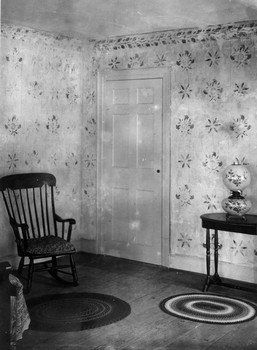

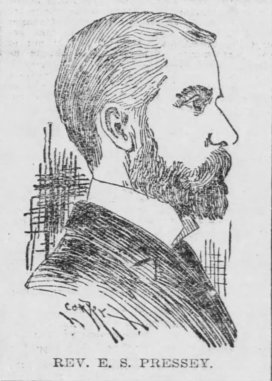
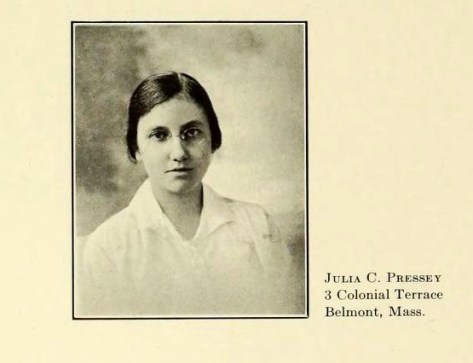


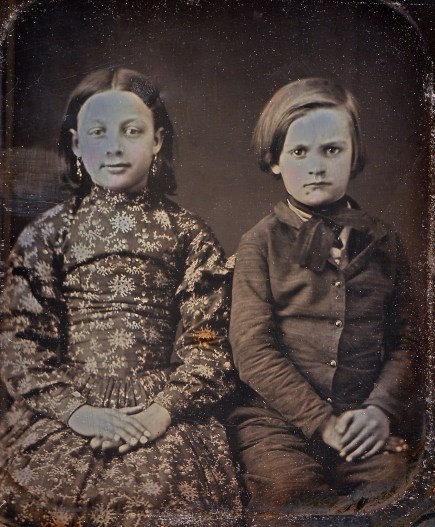


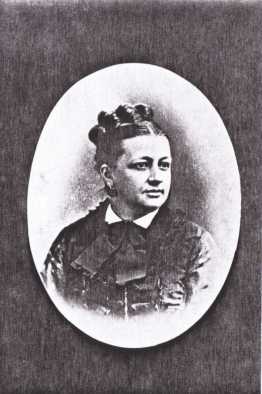


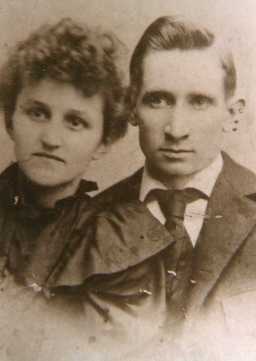

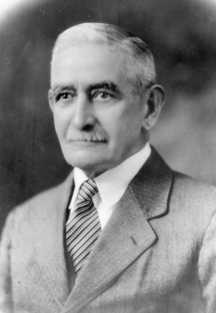
 "Your Dying Charlotte"