Comet Brooches: A Legacy of the 19th Century’s Sidereal Wanderers

“This great comet has fled from the gaze of man, and thirty generations of astronomers will pass away before it will submit itself to human scrutiny.” —H.A. Howe

6929420575_a846084621_b
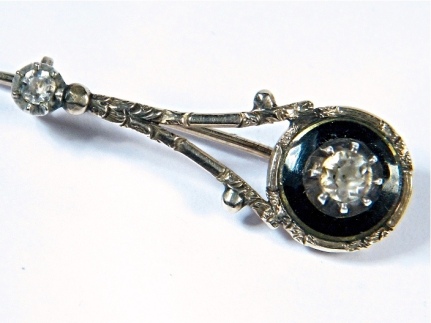
Halley’s Comet brooch, 1835. Ann Longmore-Etheridge Collection.

This piece from my collection is an antique English, 9-carat gold comet mourning pin. It is beautifully made, with a hand-chased stylized tail, black enamel embellishment, and a glittering foiled paste stone in silver settings, clearly displaying a black spot to simulate the open culet of a diamond.

The unusual shape of the brooch commemorates the return of Halley’s Comet in 1835. Although this piece neither contains a loved one’s hair nor bears an inscription, the use of black enamel almost certainly associates it with loss during the comet pass year.

Halley’s Comet is named after English astronomer Edmond Halley, who studied previous sightings and correctly predicted its 1758 apparition. The comet returns every 75 years, with its last apparition in 1986 and its next to come in 2061. I will be 98, if I live to see it.

The first report of the comet is from its pass above China in 467 B.C. (Centuries later, during another apparition, the Chinese would call it by the beautifully evocative name, “Broom Star.”) The British Museum, London, holds other documentation in the form of cuneiform tablets describing the comet’s appearance over Babylonia in late September, 164 B.C.

Continue reading “Comet Brooches: A Legacy of the 19th Century’s Sidereal Wanderers”
New Year’s Eve: Roaring End, Rowdy Beginning

New Year’s Eve was celebrated on 31 December for the first time in 45 B.C. when the Julian calendar came into effect.

anticipation 9
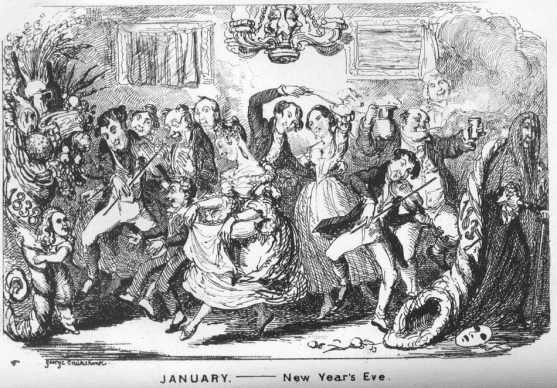
New Year’s Eve in the 19th Century was as jolly and booze-fueled as it is in the 21st. Here, Baby New Year 1838, the first born of the reign of young Queen Victoria, enters stage right as the black-draped old woman of 1837 departs stage left, taking with her the Georgian Era.
vintage-new-years-eve-celebrations-4
This New Year’s Eve party had it goin’ on. Conga lines—usually drunken Conga lines—became popular in the 1930s and remained so right through the 1950s. The Conga was originally a Cuban Carnival dance.
CXiMIVtUkAAT3eE
Nothing says Swinging ’60s New Year’s Eve like bullet-bra and hot-pants-wearing  go-go dancers workin’ it in a giant glass of champagne.

Continue reading “New Year’s Eve: Roaring End, Rowdy Beginning”

The McGrawville Experiment

In about 1849, a mother and child were photographed in a New York town where visionaries struggled to change the world.

music1IMG_0002
1/6th-plate daguerreotype from the Ann Longmore-Etheridge Collection.

A long inscription is penciled inside the case of this daguerreotype: “The picture of Flora and her mother, taken when she was three years old at McGrawville, Cortland Co., NY.

IMG_9675
The penciled inscription inside the daguerreotype case.

“I’ll think of thee at eventide/ When shines the star of love/ When Earth is garnished like a bride/ and all is joy a-bove/ and when the moon’s pale genial face/ is shed or [sic] land & sea/ and throughs [sic] around her soft light/ t’is then I think of thee. EM

“Flora & I are in the parlor as I write this, talking of the war, etc. etc. Henry …?… is buried Thursday Oct. 30th, ’62.”

The sentimental verse is likely based on “Better Moments,” by poet Nathaniel Parker Willis (1806-1867), printed in 7 July, 1827’s New-York Mirror and Ladies Literary Gazette, Volume IV, as well as and in the New Mirror’s Poems of Passion in 1843. Willis’s poem includes the lines: “I have been out at eventide/ Beneath a moonlit sky of spring/ When Earth was garnished like a bride/ And night had on her silver wing.” It is uncertain whether variants of Willis’s poem existed that included the stanza scriven in the case, or whether the writer “borrowed” a few lines of it for his or her own poetic creation.

Continue reading “The McGrawville Experiment”

Remembering the Christmas Truce of 1914

During World War I, soldiers on both sides ceased dealing death for one joyous Christmas Day.

ww1-xmas-1_custom-38641966b11e147a12de9127e356b676a7f80272-s900-c85
Camaraderie outside the trenches, Christmas Day 1914. A beautifully colorized version of this photo can be found here.

It came and then was gone, but for a while, death held no dominion on the battlefields of France. Soldiers on both sides were entrenched, following killing orders from generals and cousin kings. “You no shoot, we no shoot,” the signs Germans troops held up supposedly read. So, the British did not shoot. Instead, they all met in the middle—a muddy No Man’s Land. They decorated tiny Yule trees and exchanged cigarettes, cigars, tinned foods, and even helmets. They buried their dead; they sang carols and played football, too.

According to historian Gerard DeGroot, a professor at the Unversity of St. Andrews, “The truce was, first and foremost, an act of rebellion against authority. In the trenches, though peace on earth seemed a ridiculous fantasy, impromptu ceasefires had been occurring as early as December 18. The British High Command, alarmed that the holiday might inspire goodwill, issued a stern order against fraternization. Officers were warned that yuletide benevolence might ‘destroy the offensive spirit in all ranks’. Christmas, in other words, was to be a killing time.

“The Germans, however, were stubbornly festive. In an effort to bolster morale, truckloads of Christmas trees were sent to the Kaiser’s forces. All along the line, Germans were acting in a bizarrely peaceful fashion. Guns fell silent. Candles and lanterns taunted British snipers. Late on Christmas Eve, Germans singing ‘Stille Nacht’ [‘Silent Night’] echoed across no man’s land. The British, initially perplexed, soon joined in.”

Continue reading “Remembering the Christmas Truce of 1914”

LOL Cats of Yore

Long before Internet memes, the obsession with yowling, murderous, disdainful, aloof, and weirdly adorable felines produced trade cards that are still collected today.

1cats002
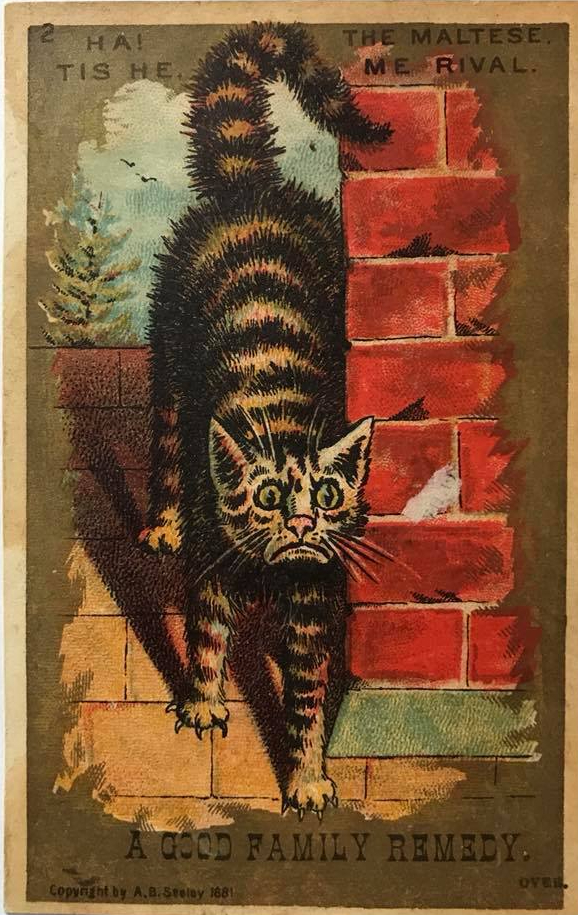
Adored today, cats were just as freakishly lovable to Victorians, as is proven by this circa-1890 blank advertising trade card.
24852460_10155936062904618_543411115094951409_n
“Ha! Tis He. The Maltese. Me rival.” Remember the old saying, “Don’t forget to put the cat out”? There were once many more domestic felines who roamed the night, yodeling for love, murdering small animals, and creating loud mayhem when territorially challenged. This circa 1881 trade card was for Allen’s Lung Balsam, “For the cure of all affections of the lungs, throat and chest, such as consumption, colds, coughs, asthma, bronchitis, croup, whooping cough, pain or oppression of the chest, hoarseness, spitting of blood and all pulmonary diseases.” Drawn by A. B. Seeley. William H. Helfand Trade Card Collection.

Continue reading “LOL Cats of Yore”

The Unquiet Afterlife of Katherine Parr

BRITAIN-ART-AUCTION-BONHAMS
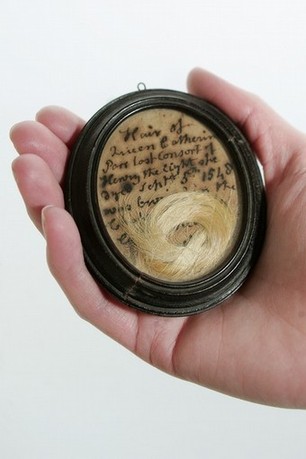
The card beneath the blonde lock inside this circular frame reads, “Hair of Queen Catherine Parr, last consort of Henry, taken the night she dyed September 5th 1548, was buried in the Chapel of Sudeley Castle, Near Winchcombe.” The Queen’s relic was sold by Bonhams, London, in January 2008 for £2,160 to Charles Hudson of Wyke Manor, Worcestershire. His estate once belonged to Katherine. Photo Courtesy of Bonhams.

In the aftermath of Katherine Parr’s passing, Lady Elizabeth Tyrwhitt, one of her closest friends, recalled, “Two days afore the death of the Queen, at my coming to her in the morning, she asked me where I had been so long, and said unto me, she did fear such things in herself, that she was sure she could not live. Whereunto I answered, as I thought, that I saw no likelihood of death in her. She then having my Lord Admiral by the hand, and divers others standing by, spake these words, partly, as I took it, [in delirium], ‘My Lady Tyrwhitt, I am not well handled, for those that be about me careth not for me, but standeth laughing at my grief, and the more good I will to them, the less good they will to me.’”

Continue reading “The Unquiet Afterlife of Katherine Parr”

Harriet Fox: Drowned at the Wethersfield Ferry

“Connecticut River at Hartford 18 feet above low water mark. Heavy rain still prevailed, with much thunder.”—Beckwith’s Almanac

8675468897_e284cf87a6_h
Harriet Leonard Hale Fox, 1/4-plate daguerreotype, circa 1852. Ann Longmore-Etheridge Collection.

Harriet Leonard Hale, scion of an old and venerable New England family, was the third child and only daughter of Russell Hale. Hale was born 22 July, 1799, in Glastonbury, Hartford County, Connecticut, and died 13 April, 1849, in that same place. Harriet’s mother, Harriet Ely, was  born 17 April, 1803, in Agawam, Massachusetts, and died 2 September, 1880. Russell was the son of Thomas Hale of Glastonbury (10 June, 1768–12 Feb., 1819) and Lucretia House (1771–24 September, 1835). The Hales descended from Samuel Hale, born 1 July, 1615, at Watton-at-Stone, Hertfordshire, England, who came to Connecticut as a young man, married Mary Smith in about 1642, and died in Glastonbury on 9 November, 1693.

Harriet Hale was born 14 April, 1833, in Glastonbury. Her two older brothers were Robert Ely (1827–1847) and Henry Russell (1830–1876). The 1850 Census of Glastonbury included Harriet Ely Hale as a widow, together with her daughter Harriet and her son Henry, a farmer. It is the only census that Harriet Hale Fox appeared on, as the one compiled a decade previously, when she was seven in 1840, listed the names of household heads only.

43406875_135725924579
A daguerreotype of Henry Fox, circa 1852, now in a private collection. The daguerreotypes of both Henry and Harriet were sold concurrently online.

At age 18, Harriet wed blond, bearded, and bespectacled Henry Fox, a man twelve years her senior, on 5 October, 1851. He had been born in East Hartford, Hartford County, Connecticut, 19 April, 1821, and was the son of Leonard Fox (1792–1866) and Hannah Nicholson (1795–1894). The Fox family had been in New England since emigrating from London in the 17th century. Members of the clan participated in the Revolutionary War, and Leonard Fox fought in the War of 1812.

Continue reading “Harriet Fox: Drowned at the Wethersfield Ferry”

The Year Thanksgiving Was Moved Up a Week

As we hear the starting gun of the holiday season, here is another wonderful read by Ken Zurski of the site Unremembered.

Ken Zurski, author's avatarUNREMEMBERED

By Ken Zurski

In September of 1939, Franklin Delano Roosevelt issued a presidential proclamation to move Thanksgiving one week earlier, to November 23, the fourth Thursday of the month, rather than the traditional last Thursday of the month, where it had been observed since the Civil War.

Roosevelt was being pressured by the Retail Dry Goods Association a group that represented merchants who were already reeling from the Great Depression. Thursday of that year fell on the 30th, the fifth week and final day of November, and late for the start of the shopping season. The business owners went to Commerce Secretary Harry Hopkins who went to Roosevelt. Help out the retailers, Hopkins pleaded. Roosevelt listened. He was trying to fix the economy not break it.

Thanksgiving would be celebrated one week earlier, he announced.

zzz4

Apparently, the move was within his presidential powers since no precedent on the date was set…

View original post 293 more words

This is His Orphan: What it Shows and What it Doesn’t

daga1IMG
Widow and Orphan, Albumen Carte de Visite, Circa 1868. Ann Longmore-Etheridge Collection.

This English carte de visite (CDV) is one of the most popular in my collection, if Flickr views and Pinterest re-pins equate to evidence, that is. It shows a young British widow—identifiable as such by the white ruching on her black bonnet—squatting in the background, having just propelled her black-clad daughter toward the photographer. The widow stares forward forlornly, her hand over her mouth, indicating without words her shock and concern for their future. It is a candid, painfully honest pose, and one rarely seen in types of images. She is no “Hidden Mother,” but a vital element of a tableau meant to convey the message, “This is his orphan.”

The reverse stamp on the CDV reads “T. Bennett, Photographer, 46 Foregate Street and Church Street, Malvern.” According to research conducted by the creator of Photographers of Great Britain and Ireland, 1840-1940, Thomas Bennett “opened his first studio in Worcester in 1856. At different times, he operated at five studios in Worcester and three in Malvern under his own name and the business continued under the name of Bennett & Son and Bennett & Sons until at least 1916.”

“The 1861 census records the [Bennett] family living at his shop at 46 Foregate, Worcester, where he is described as a Lay Clerk (of the church) and photographer. His firm Thomas Bennett and Son is thought to have been established about 1856. His branch in Great Malvern was possibly the second photographic studio” in that town—this information gleaned from the Malvern Records Office. Bennett threw open the doors of his Malvern studio in 1868 and the CDV of mother and daughter could not have been taken long afterward.

Continue reading “This is His Orphan: What it Shows and What it Doesn’t”

Long Letters Home

The sons of Albert Berthoud and Marinda Boyton Root left Pennsylvania for Kansas, Colorado, and beyond, but they never stopped writing to the people of Wellsboro.

11122599414_79b574d9de_h
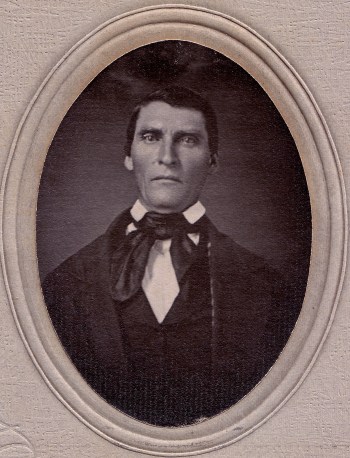
Albert Berthoud Root, Cabinet Card Copy of Original Daguerreotype, Circa 1850. Ann Longmore-Etheridge Collection.

Albert Berthoud Root was born 3 October, 1813, in Farmington, Connecticut. His parents were Connecticut-born Noah Root, Jr. (1777-10 Oct., 1854), and Nancy Smith (1779-17 May, 1845.) The Root family had come to the American Colonies in the mid-1600s, and can be traced as far back as John Roote, who was born 24 January, 1576, in Badby England.

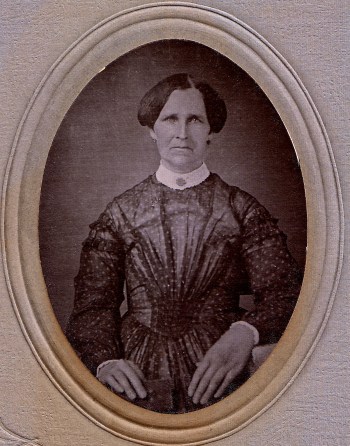
Between 1830 and 1832, Albert married the slightly older Marinda Boyden, who had been born in Royalton, Windsor County, Vermont in 1809. From the fashions displayed in this pair of cabinet cards, the originals were daguerreotypes taken in about 1850. They likely belonged to the descendants of the couple’s third son John C., as he is referenced on the reverse of each image: “Albert B. Root. John C. Root father,” and “Mrs. Mariandra Root Boyden. John C. Root mother.” The cabinet cards, which date to about 1890, are both marked “F. C. Lutes, Topeka, Kans.”

11122595324_00bac39195_h
Marinda Boyden Root, Cabinet Card Copy of Original Daguerreotype of Circa 1850. Ann Longmore-Etheridge Collection.

What Marinda actually called herself is up for debate. In the public records she appears as “Marinda,” “Miranda,” “Lavinda,” “Mariandra”—even “Gorinda.” However, Marinda appears most often, and is most likely correct.

Continue reading “Long Letters Home”