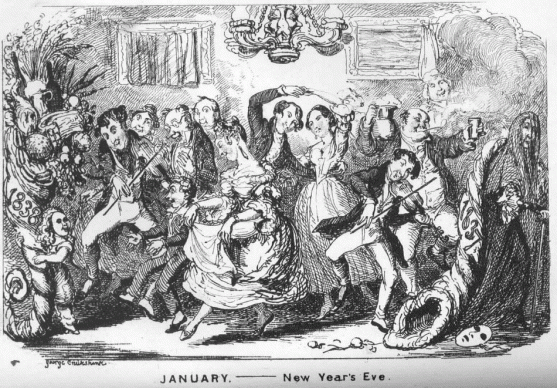


Continue reading “New Year’s Eve: Roaring End, Rowdy Beginning”
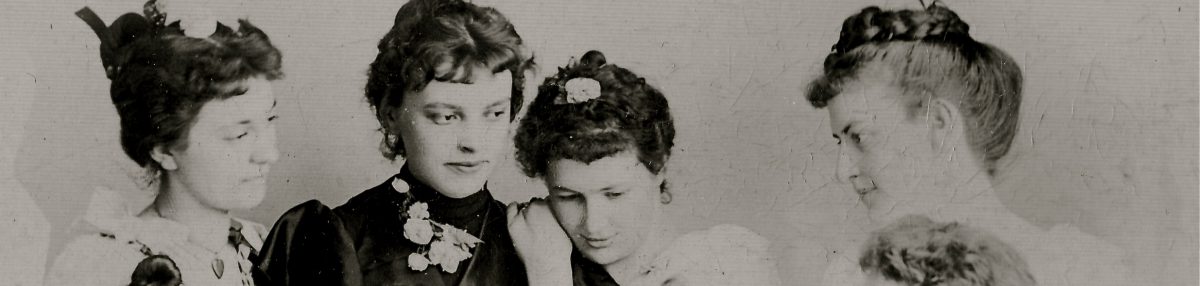
New Year’s Eve was celebrated on 31 December for the first time in 45 B.C. when the Julian calendar came into effect.
Continue reading “New Year’s Eve: Roaring End, Rowdy Beginning”
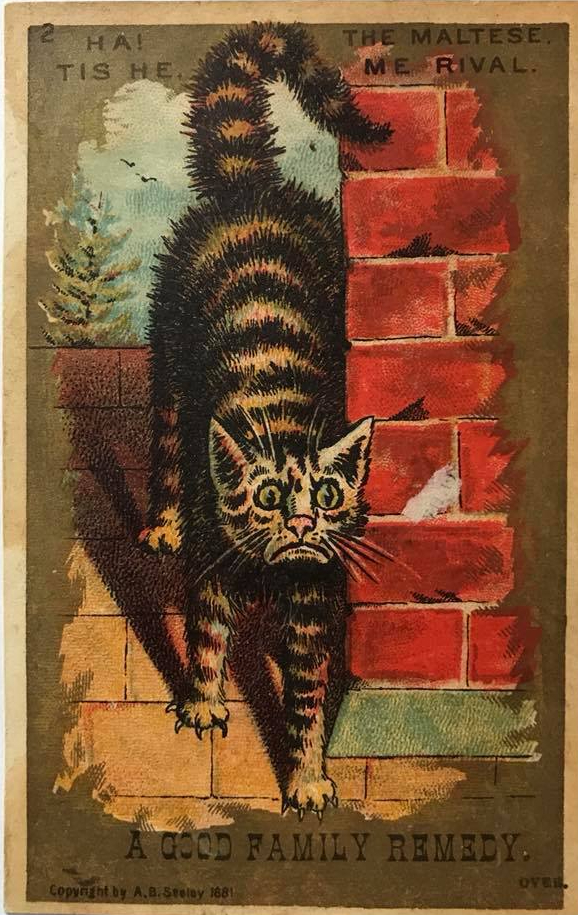
Long before Internet memes, the obsession with yowling, murderous, disdainful, aloof, and weirdly adorable felines produced trade cards that are still collected today.

Victoria’s grief drove into high gear the already strong public market for jewelry to be at worn during all stages of mourning.

At the close of the 18th century and the early years of the 19th, memorial pieces with hair were generally small, delicate, and graceful. However, the oncoming Victorian era would turn “the entire ritual of mourning into a public display, and the jewelry changed accordingly, becoming larger, heavier, and more obvious,” wrote the curators of the Springfield, Illinois-based Museum of Funeral Customs in Bejeweled Bereavement: Mourning Jewelry—1765-1920.

In December 1861, Queen Victoria’s beloved consort, Prince Albert of Saxe-Coburg-Gotha, died of what is thought to have been typhoid fever. Married for twenty-one years, their happy union resulted in the birth of nine children. The forty-two-year-old prince’s demise shattered Victoria. For the rest of her life, the queen wore mourning and required many courtiers who served her and who attended court functions to do the same.
Victoria’s grief drove into high gear the already strong public market for jewelry to be worn during all stages of mourning. For example, in the first nine months, the only acceptable jewelry was made of black glass, dyed pressed animal horn, gutta-percha (a latex plastic derived from tropical evergreens), vulcanite and ebonite (rubber treated with sulfur and heat), bog oak (fossilized peat), or carved from jet (a fossilized wood that washes up on west coast Yorkshire beaches, and was extracted from shale seams, particularly around between Robin Hood’s Bay and Boulby). In later stages of mourning, gold or pinchbeck (a composite metal) and hair-work jewelry commemorating the deceased was worn. Many of these items bore the motto “In Memory Of” and featured heavy black enameling.
“Life asked death, ‘Why do people love me but hate you?’ Death responded, ‘Because you are a beautiful lie and I am a painful truth.’”—Author Unknown

Lavada May Dermott, seen above laid out in her parents’ home, surrounded by funeral flowers, was born 9 May, 1888, in Goshen, Belmont County, Ohio, to Charles Evans Dermott (1849-1907) and his wife, Sarah Jane Stewart (1853-1936). Sarah was the daughter of Eleazar Evan Stewart (1834-1910) and Honor Brown (1835-1914).
Lavada’s parents married in Goshen 26 January, 1871. They first make an appearance as a family unit on the 1880 Census of that township. Evans Dermott—he went by his middle name—listed his occupation as “huxter.” His father, Irish-born farmer William Dermott (1811-1896) was also a part of the household—his wife, Eliza Kelly (1813-1879), having died the year before.
Evans and Sarah had together four children: William Wilber (1871-1947), Charles E. Dermott (19 June, 1881-23 September, 1944), Lavada, and Lillie F. Dermott (1895-1987). On 20 May, 1900, the eldest son, William, married Grace Stanley King. William spelled the family name as Der Mott and is buried thusly in Forest Rose Cemetery, Lancaster, Ohio. By 1910, the Der Motts lived in Cleveland, Ohio. William became a garment cutter for a clothing company and eventually was the manager of a clothing store. He worked in that position as late as 1940. They had two children: Neil (b. 1902) and William P. (b. 1903).
“For to him above all was life was good,
Above all he commanded, her abundance full-handed.”—Rudyard Kipling, 1910

In 1910, Dr. William L. Bates of Sioux City, Iowa, took the boat The Florida on a meandering holiday. One of his stops was Windsor, Ontario, Canada. While there, he photographed the Windsor Post Office, located at Ouellette Avenue and Pitt Street. Bates found the public building draped in mourning after the death of British King Edward VII, who had passed away 6 May. A ladder was propped against one side of the building indicating that the mourning swags were in of the process of being raised, so likely this image was captured within a day or so of the king’s demise.
King Edward VII was born Prince Albert Edward, Prince of Wales, second child and eldest son of Queen Victoria and Prince Albert of Saxe-Coburg and Gotha, on the morning of 9 November, 1841. “Our little boy is a wonderfully strong and large child, with very large dark blue eyes, a finely formed but somewhat large nose, and a pretty little mouth,” wrote Victoria to her uncle, Leopold, King of the Belgians, on 29 November. “I hope and pray he may be like his dearest Papa.”
Sadly, “Bertie,” as he was known amongst his family, was little like his erudite, brilliant, moral father or his paragon elder sister, Princess Vicky. Bertie strove to please his parents, who had devised a strict educational program for the heir to the throne, but the boy could never rise to the tonnage of their expectation. Once the grown prince matriculated to Oxford and Cambridge, however, he performed well as a student, giving the lie to his family’s belief that he was somewhat mentally deficient.
The eerie and eclectic photography of Caroline Leech

Carolyn, an English woman who lives in Spain, writes of herself: “I am an obsessive Victorian and lover of all things Gothic. As a child I would often rather spend my pocket money in the local antique shop on postcards, photos, stamps or coins than in the toyshop. History just always fascinated me.”
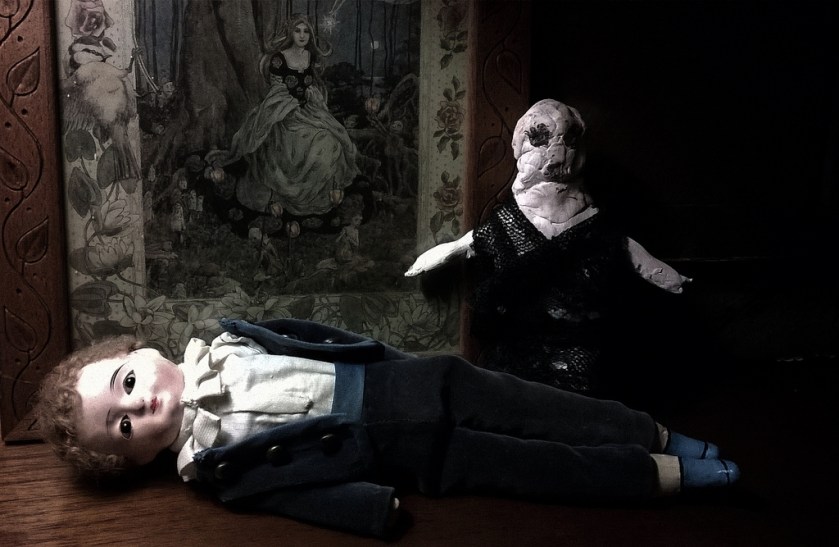 “I then developed an interest in spirits and faeries and fell in love with writers such as my beloved Charles Dickens, Sheridan LeFanu, Emily Dickinson and with the whole world of Victorian spiritualism, mourning, the faery painters of the time and also the darker aspects of Victorian society.”
 “I live in a watermill in the middle of a forest, which is always an inspiration to me. I feel I am surrounded by all sorts of spirits.”
 “I have been an antique dealer and visionary artist for years and am also a keen amateur photographer of anything mysterious. My greatest love is of course Victorian photography, these amazing ghosts which pleasantly haunt the pages of my book and the drawers and cabinets of my bedroom.”
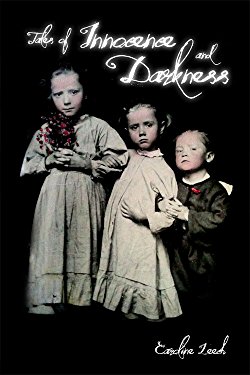
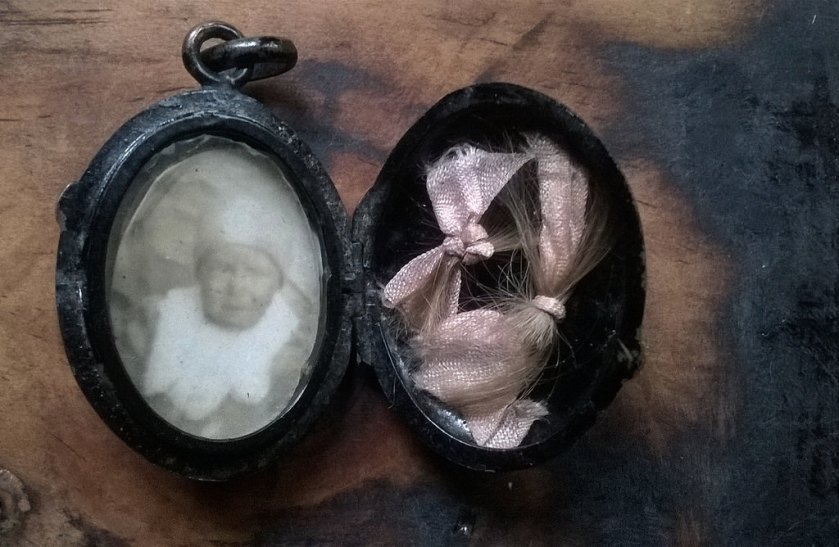 Caroline’s book of photos and poetry can be purchased at Amazon. You can also visit her Flickr photostream. Ω
“It was the purpose of the author to describe a number of novel and curious effects that can be obtained by the aid of the camera, together with some instructive and interesting photographic experiments.”—F. R. Fraprie, 1922

By Beverly Wilgus
In 1893, H. P. Ranger was granted Patent No. 505,127 for a “Mirror For Use In Photography.” This was a device comprised of two adjustable mirrors set at an angle. When a subject was placed in front of it, his or her image was reflected in each mirror and that reflection was again reflected, resulting in five or more figures—the number of figures determined by the angle of the mirrors.

The above schema is from an article published in Scientific American in the 1890s that was included in the 1896 book Photographic Amusements by Frank R. Fraprie and Walter E. Woodbury. My husband and I own a copy of the 1931 edition that still contains the original illustrations.

Also from the book is the illustration above: “Diagram Showing The Method Of Production Of Five Views of One Subject By Multiphotography.”
Continue reading “Photo-Multigraphs: The Mirror and the Camera”
“Because I feel that in the heavens above
The angels, whispering one to another,
Can find among their burning tears of love,
None so devotional as that of ‘Mother,’
Therefore, by that dear name I have long called you,
You who are more than mother unto me.” — Edgar Allan Poe


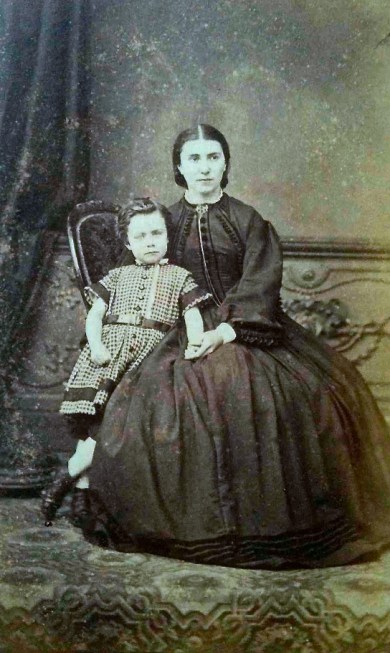

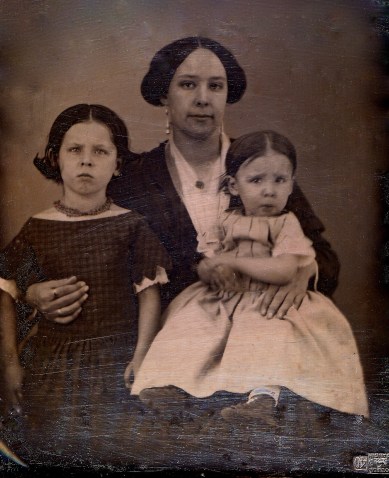
Ω
A quick note: I will be having surgery on Tuesday, 4 April, and will be taking at least a four- or five-day hiatus to recover. I will return as soon as possible. Promise.
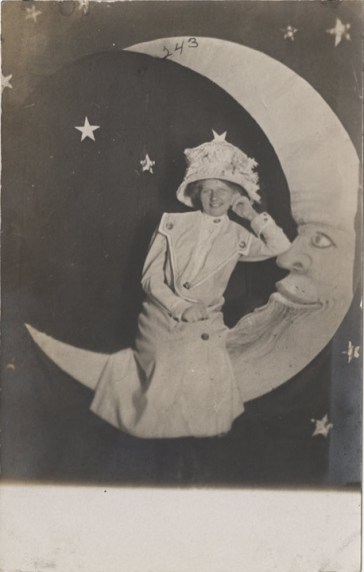
A selection of paper-moon real photo postcards from the collection of Jack and Beverly Wilgus. All date from the second decade of the 20th Century.



Ω
All of Jack and Beverly’s paper moon images can be seen here.
Do you have a vintage image or artifact that might educate and entertain? If so, I would be delighted to hear from you.
“Thank you dear for the nice letter you sent us and all the kisses. Hope you are a good boy. Did you throw Herbert out of bed Sunday morning?”
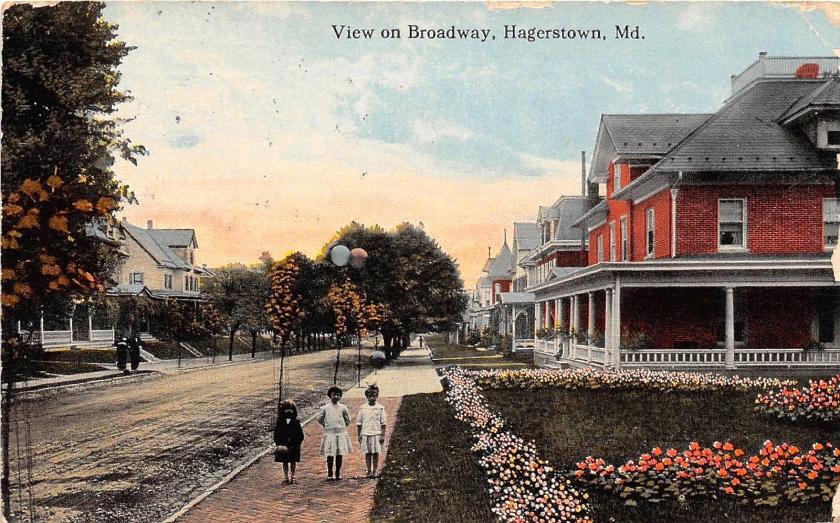
Today’s postcards convey “Wish you were here!” almost exclusively, but in the first decades of the 20th Century this method regularly moved information to friends and family who resided even just a few miles away. The short messages often read much like modern email, and when in combination with the photos on the front, can seem like old-school versions of modern Facebook posts.
On 4 March, 1914, this cheerful, beautifully colored postcard of Hagerstown, Maryland’s Broadway (above) was sent to Mrs. C. L. Pennison, Newton, Massachusetts, care of Peckitts on Sugar Hill. The message reads, “Dear Catherine, I was pleased to get your card on Monday while at home. But surprised to hear you are in the White Mountains. I hope you will soon recover your health up there. We were in the midst of a blizzard Monday but are enjoying pleasant weather now. I am well and enjoy my work. Yours, B.”
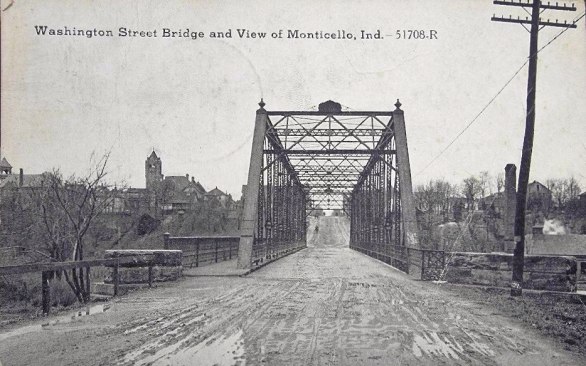
This postcard of the Washington Street Bridge, Monticello, Indiana, was addressed to Miss Ruthie Brown of Modesto, Illinois, and mailed 4 July, 1913. The reverse reads, “Dear Ruth: This is where I am spending the day. This morning our car struck a buggy just as we were going up the hill beyond this bridge. I hope you are having a lovely vacation. Would like to hear from you very much. Grace Mc. 1 Danville, Ind.”
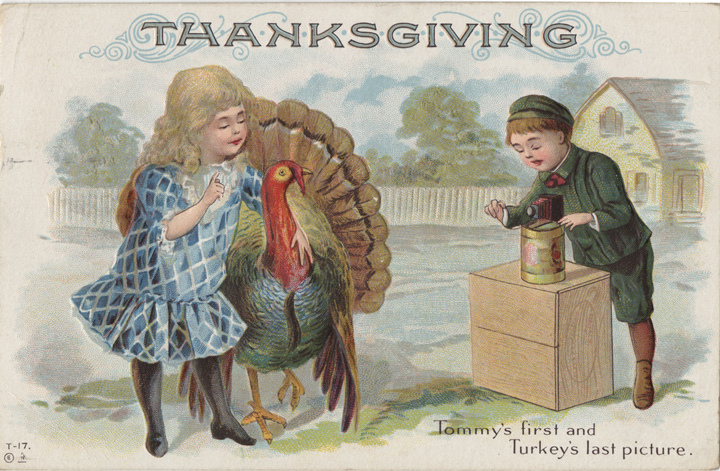
Beverly Wilgus, the owner of this example, writes, “This postcard was mailed by a grandfather to his granddaughter in November, 1912. The caption ‘Tommy’s first and Turkey’s last picture” [has an] unpleasant edge. The image is embossed and gives the figures a slight 3D effect. It was sent to Dorothy Flower in North Uxbridge, Massachusetts, by Grandpa Midley.”
The message reads, “Dear Dorothy: How would you like to have your picture taken this way? I suppose you would rather have some of the turkey to eat. Hope you will have some for your Thanksgiving dinner. Am going to try to get to No. Uxbridge to see you soon.”
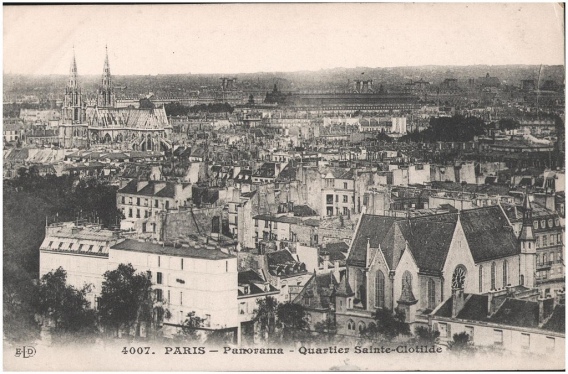
Margaret Ripley was a nurse in France during World War I. The above is one of a series of postcards she sent to her sister back in Surrey, England. “Had 2 nice days here unfortunately Louvre & all museums shut but seen as much as possible. Off to Dunkirk tomorrow to typhoid hospital—so glad to feel we may at last get real work in connection with war. Have enjoyed our week’s holiday very much & were hoping to stay on here a few more days. Love to E & children. Hope they are well again. Mar.”
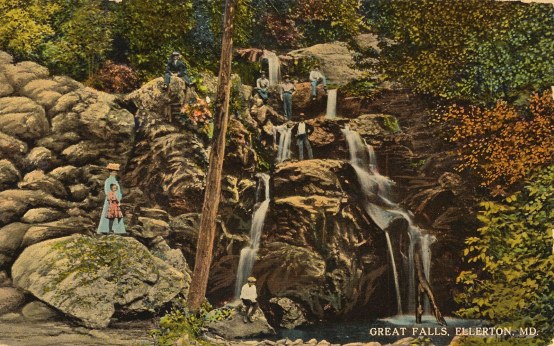
Although the photographic image is from a decade previous, this postcard’s stamp was cancelled 24 December, 1922. Addressed to Mr. S. Schmall, 4549 Calumet St., Chicago, Illinois, the delightful message reads: “Thank you dear for the nice letter you sent us and all the kisses. Hope you are a good boy. Did you throw Herbert out of bed Sunday morning? Love to you & all. Aunt Alice.”
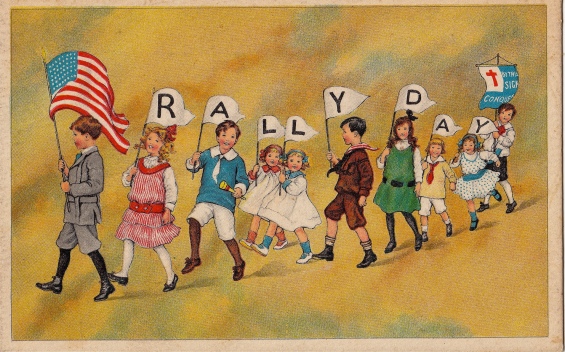
Postmarked 30 October, 1917, this postcard was sent by the United Brethren Sunday School of Myersville, Maryland, to Helen Keller and family. “U B ready for the U.B. Rally. We need you on Rally Day. Remember the date: Nov. 11th. Do not disappoint us. Help us make this our best Rally Day.” (If there was a smiling emoticon after “Do not disappoint us,” I would feel less creeped out.)
According to Holidays, Festivals, and Celebrations of the World Dictionary, “In liturgical Protestant churches, Rally Day marks the beginning of the church calendar year. It typically occurs at the end of September or the beginning of October. Although not all Protestant churches observe this day, the customs associated with it include giving Bibles to children, promoting children from one Sunday school grade to the next, welcoming new members into the church, and making a formal presentation of church goals for the coming year.”
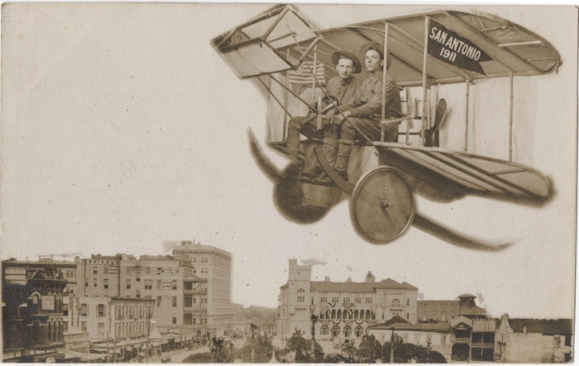
Beverly Wilgus writes, “This multiple-print, real photo postcard shows two soldiers in a studio prop biplane flying over a real San Antonio streetscape. A banner reading ‘San Antonio 1911’ flies from the wing. Even though the plane is obviously phony, the two airmen appear to be real pilots since the message on the back reads, ‘Our first lesson what do you think of it? Geo.’”
I’m thinking Photoshop, version 1.911. Ω
 "Your Dying Charlotte"