It seems like a good time to remember once again the winters of Yore…*












*All black and white images were colorized.
Ω
It seems like a good time to remember once again the winters of Yore…*
*All black and white images were colorized.
Ω
“She sleeps in peace, dear sister sleeps—
Art thou forever gone?
No, we will see thee soon again,
Where parting is unknown”— In Memory of Mary Frey by Her Sister CMB

This angelic child, pictured at the start of what should have been a long life, was Edyth Embery, born 5 March, 1909, in Frankford, Philadelphia County, Pennsylvania. She was the daughter of Dr. Francis Patrick Embery (1867-1939), a Philadelphia otorhinolaryngologist, and his wife Miriam Fairbairn Wilson (1875-1948), whom he wed in early 1899. (The 12 February Philadelphia Inquirer described Miriam as wearing “heavy corded white silk, trimmed with chiffon and lace and carried bride roses. The flower girl, maid of honor, and bridesmaids wore white organdie and carried white carnations.”)
Francis Embery, known as Frank, was born at Foxchase, Philadelphia County, to William Henry Embery (1840-1914). Frank’s father was, by 1872, head of the Assay Laboratory of the United States Mint. Previously, he’d served as a sergeant in Co. A, 1st New Jersey Cavalry, during the Civil War. Frank’s mother was Annie Elizabeth Manning (1841-1921), who was of Irish descent.
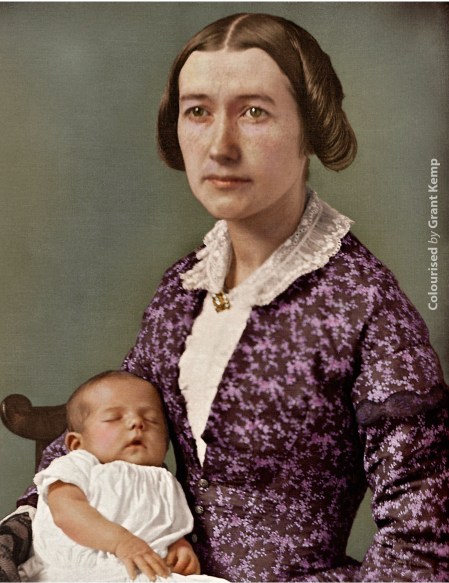
Recently, I was honored that Grant Kemp, of restoringyourpast.co.uk and a truly remarkable artist, chose two of my daguerreotypes to colorize. The results were utterly revitalizing, as can be seen from the comparison below.


Grant says of himself, “Trained as a Graphic Designer, I have a Bachelor of Arts Honours Degree in Graphic Design. During my long graphics and print career, I have used design, image software and scanners from every leading supplier including the highest resolution drum scanners. I bring all of my industry experience to the Restoring Your Past service. Graphic design, image scanning, newspaper/magazine production, web, litho, and digital printing experience means I can offer a graphics service that’s based on having dealt with just about every sort of image destined for any type of output.”
Enjoy these samples of his work and if you have old family photographs to restore or colorize, a better digital artist than Kemp is unlikely to be found.

Continue reading “Resaturated with Life: Historical Photos Colorized by Grant Kemp”
Every village has its quirky characters. My own, Myersville, Maryland, was once home to a cantankerous teacher, reverend, and still-breaker nicknamed “Buffalo Bill.”

“Myersville—Emphasizing the need for lights in the streets of Myersville, there was a stoning encounter on Saturday night, when Robert J. Ridgely, a school teacher at Burkittsville and a resident of Myersville, was stoned by four or five young men of the town. Reports have it that Mr. Ridgely stoned back, but as the teacher could not be located this morning, this could not be verified.

Mr. Ridgley has an ugly cut over one eye, which bled profusely, and Wilber Shepley, one of those in the in the party stoning Mr. Ridgley, also has a cut, probably inflicted by a stone, although one report has it that Mr. Shepley sustained the cut by striking a telephone pole, while running.
“The stoning incident has aroused a number of people in the town, and it is stated that there is a stronger sentiment for electric lights, many residents claiming the affair would not have happened had the town been well lighted.”
The victim in this article, Robert Johnson Ridgley was born in Myersville in January 1867 to William Worth Ridgley (1822-1901) and his wife Martha Matilda Johnson (1834-1920). (Note: The family name is spelled variously as Ridgely, Ridgeley, and Ridgley. For consistency only, I am using the latter.) William Ridgley was well-known in the area for his success as a farmer although he was blind. His tenacity and determination were inherited by his son.
As an adult, Robert Ridgley received a scholarship from the Maryland State Normal School in Baltimore, later rechristened Towson University, starting his studies in September 1895. Before that, he was a teacher at Loys Public School. After his father’s death, he lived with his mother and a servant, Susan Shank, the latter of whom worked for Ridgley until at least until 1940. Keeping a long-term, live-in servant of this type is a positive testimony to Ridgely’s character, which was sometimes maligned by his fellow Myersvillians.
Continue reading ““There Lived an Old Man in Our Little Place””

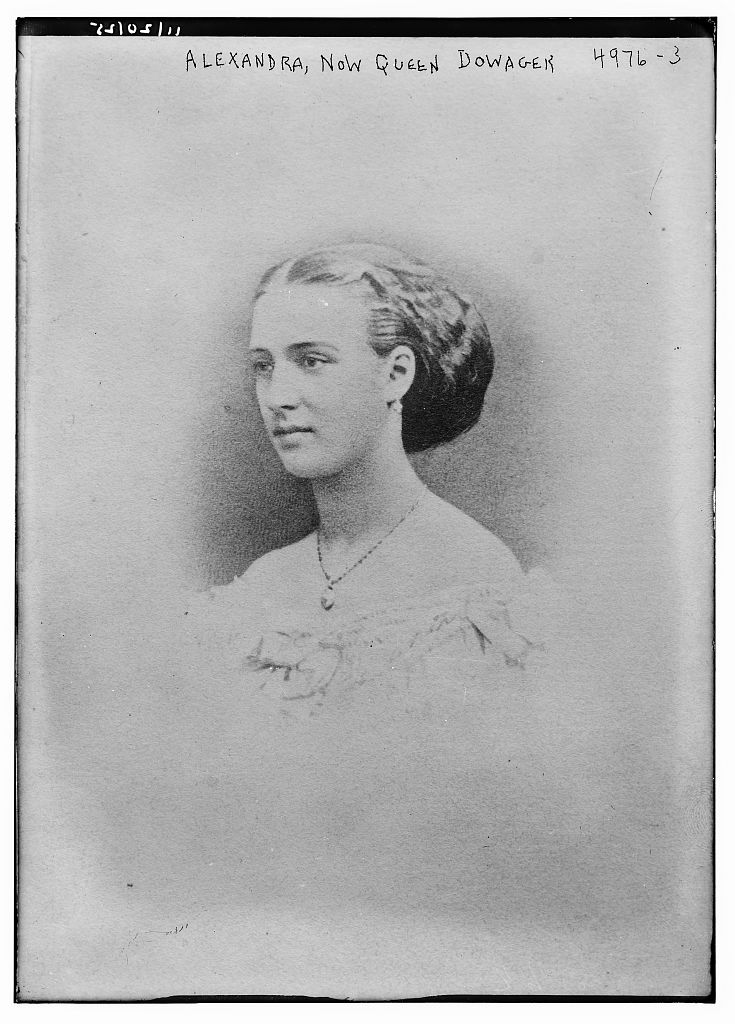

Continue reading “Preternaturally Lovely: Britain’s Queen Alexandra of Denmark”
These early Eastman Kodak adverts entice by their gauzy nostalgia, leaving us longing for Auld Lang Syne.

See more via Tim Jeffers’ The Witchery of Kodakery. Ω
As the Northern Hemisphere explodes with green life, let’s take a look back at rebirth celebrations of yesteryear.


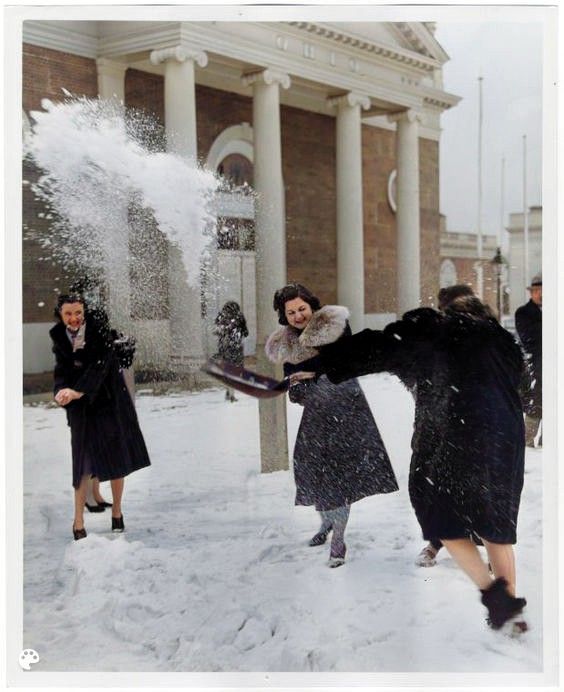
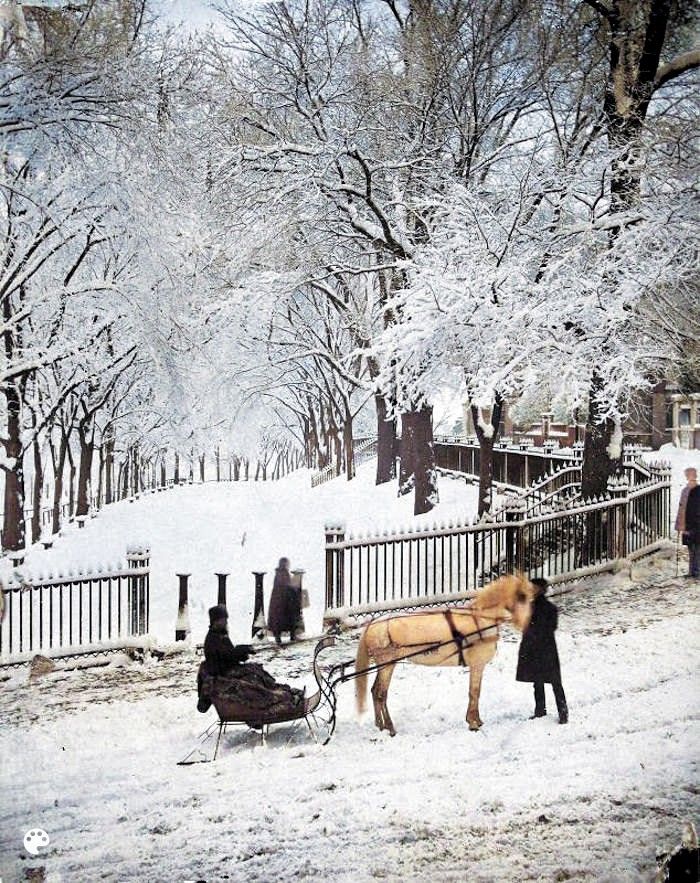
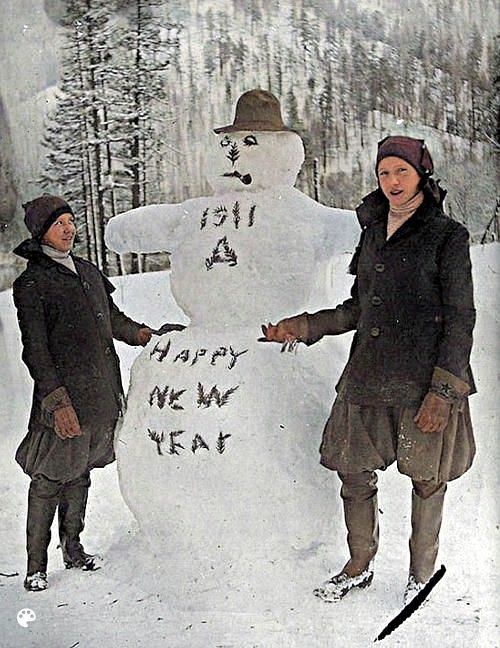
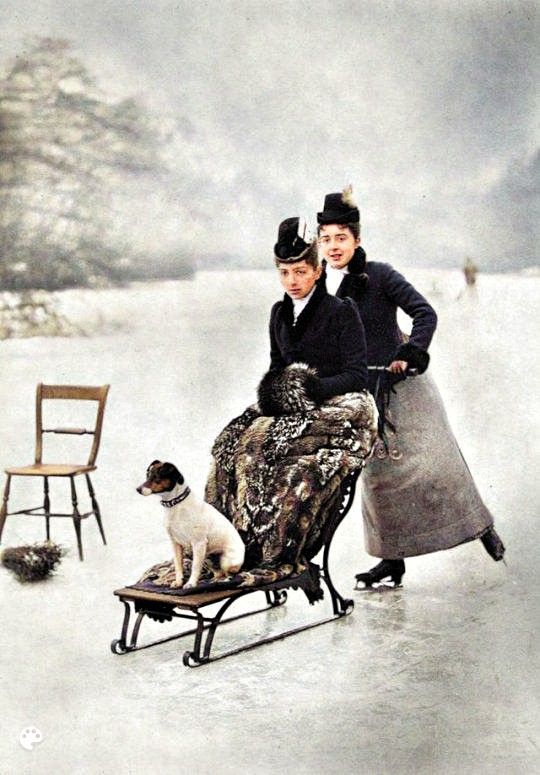
Last week, a storm brought 10 inches of snow to Western Maryland and turned my mind to snowmen of old.

In all probabilty, humans have sculpted snowmen for millenia. In 2007, Bob Eckstein, the author of The History of the Snowman: From the Ice Age to the Flea Market, told NPR that in writing his book, “I wanted to make it clear that snowman-making actually was a form of folk art. Man was making folk art like this for ages, and…maybe it’s one of man’s oldest forms of art…. [T]he further back you go, you find that people were really fascinated with snowmen.”
Eckstein says that building snowmen was “a very popular activity in the Middle Ages…after a snow came down and dumped all these free-art supplies in front of everyone’s house.” The earliest known representation of a snowman dates to that era, drawn in a 1380 A.D. Book of Hours. A century later, in 1494, Michelangelo was commissioned by Piero di Lorenzo de’ Medici, the Gran Maestro of Florence, to practice his art with snow. According to art historian Giorgio Vasari, “de’ Medici had him make in his courtyard a statue of snow, which was very beautiful.” Sadly, no one drew it for posterity.
In 1510, a Florentine apothecary, Lucas Landucci confided in his diary that he had seen “a number of the most beautiful snow-lions, as well as many nude figures…made also by good masters.” Another notable snowmen outbreak occurred just a year later, when folk in Brussels built more than 100 of them “in a public art installation known as the Miracle of 1511,” notes Atlas Obscura. “Their snowmen embodied a dissatisfaction with the political climate, not to mention the six weeks of below-freezing weather. The Belgians rendered their anxieties into tangible, life-like models: a defecating demon, a humiliated king, and womenfolk getting buggered six ways to Sunday. Besides your typical sexually graphic and politically riled caricatures, the Belgian snowmen, Eckstein discovered, were often parodies of folklore figures, such as mermaids, unicorns, and village idiots.”
Gentle Readers, your Humble Proprietress is recovering from surgery and so shall share photographic images of antique and vintage buttons in lieu of a lengthy article.

Of buttons, Collector’s Weekly writes, “As long as human beings have needed to keep their clothing fastened, buttons have been there to do the work.” Buttons may be utilitarian, however, even well into the era of mass production, they were made to be reused on the garments of succeeding generations, resulting in little works of art that please collectors’s eyes today.

Many still recall our grandmothers’ button jars or boxes filled with delightful miniature wonders of carved shell, shiny metal augmented with brilliant cut-steel embellishments, luminous glass, light and fancifully shaped celluloid, and bakelite of eye-watering colors. I was born in 1963, my father in 1928, and my father’s mother in 1891. Some of my earliest memories are of Nanny, as I called her, sewing on a black Singer treadle machine richly decorated with Victorian gothic revival red and gold designs. As Nanny pumped the ornate foot panel in a soothing rhythm, I played in a pool of buttons scooped from the sewing machine’s cabinet drawers. I remember, especially, bakelite raspberries, as tart red as the real fruits, and a large navy blue button shaped like a bundle of roses. I have recently obtained a white version, seen below.
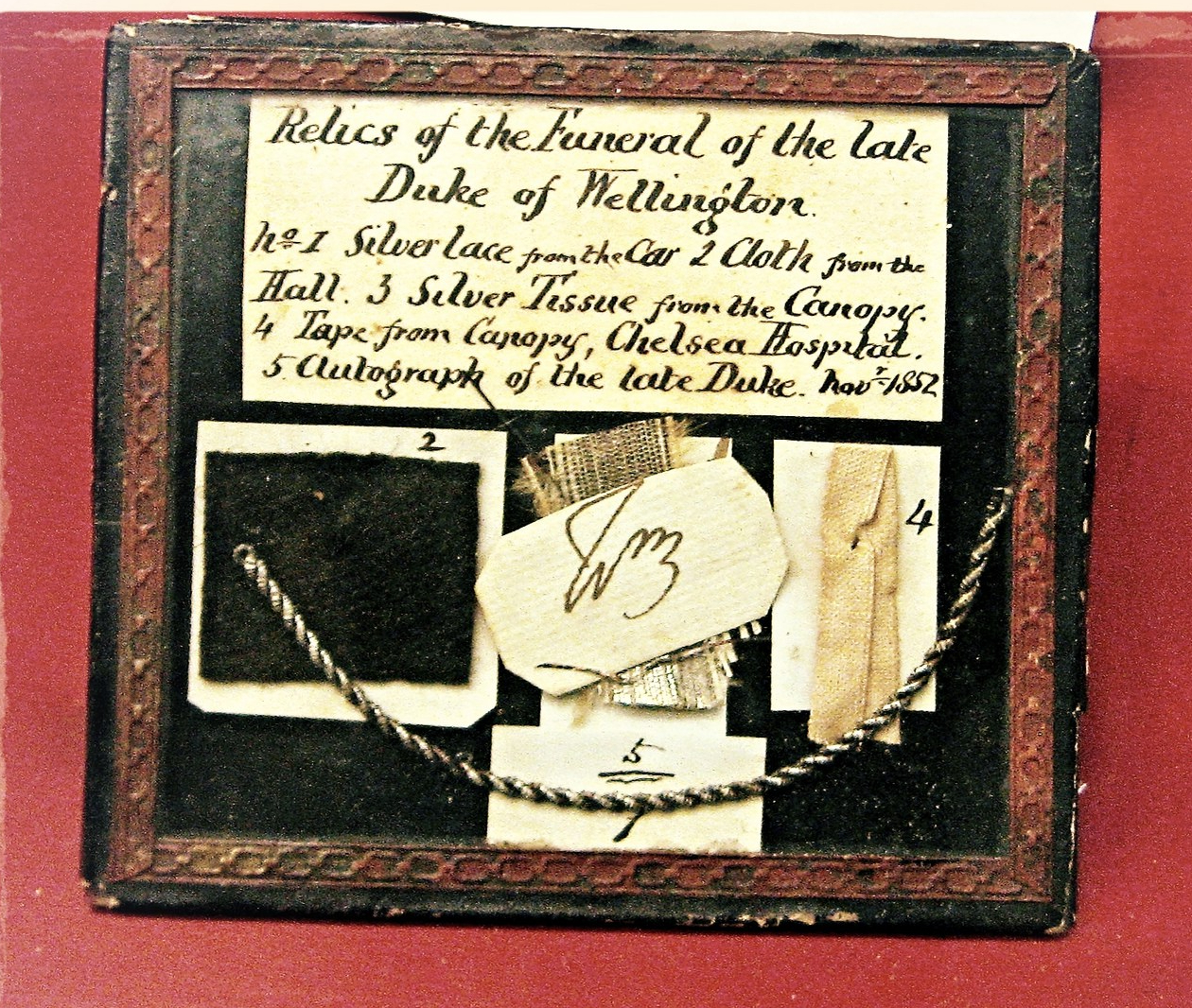
“When old Francis died in 1913, Dad sent him off in a hearse pulled by four black horses followed by mutes carrying ostrich feather wands and a procession of friends and family in the deepest mourning possible.”—Barbara Nadel


 "Your Dying Charlotte"