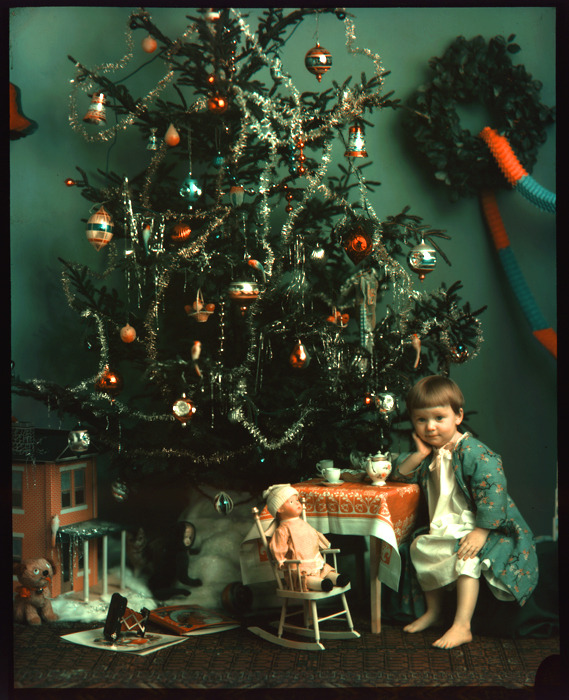

Continue reading “Best Christmases Ever: Twenty Color Photos from Holidays Gone By”
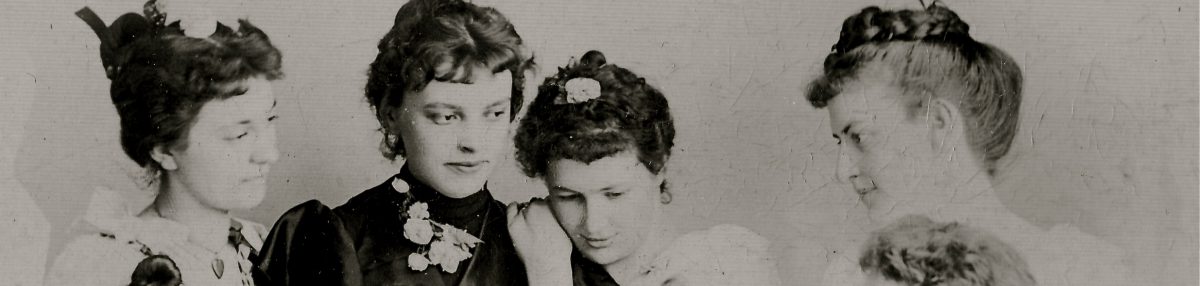
Continue reading “Best Christmases Ever: Twenty Color Photos from Holidays Gone By”
“I am presently living with Hans Hemmig and have taken service with a shoemaker for one month. He promised to pay me £10.”
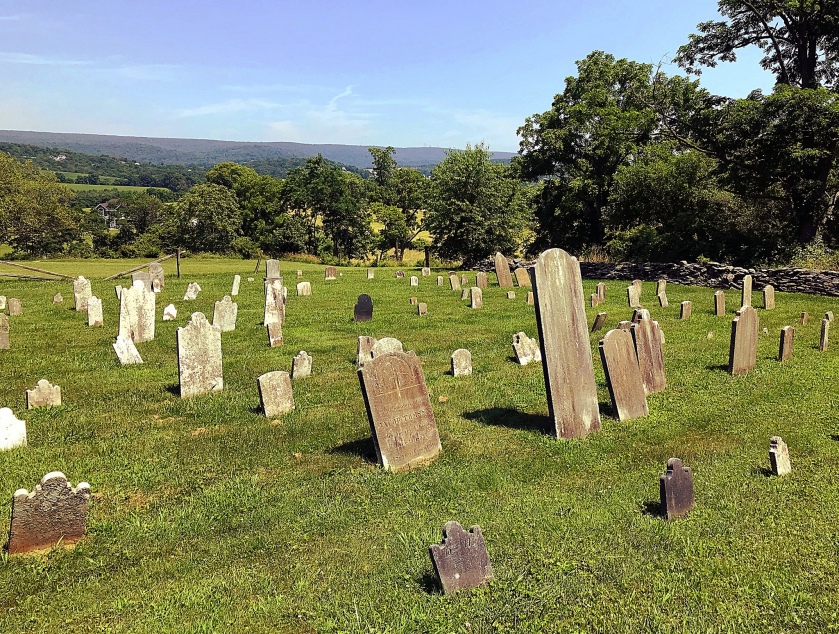
On 5 October, 1722, in Ziefen, Canton of Basil-Land, Switzerland, a healthy male infant was born and christened Peter Recher. Either before his birth or slightly thereafter, his Anabaptist father, Martin Recher IV (1692-1760), was exiled from the canton. This was probably at the declaration of the Anabaptist Bureau, which was, in 1699, created to capture and banish members of the then-heretical group now known as Mennonites. Anabaptists believed that a public confession of sin and faith followed by an adult baptism was required and that infant baptisms were meaningless because babies were incapable of choosing baptism freely. Little Peter may not have seen his father until 1730, when Martin was allowed to return from exile in Oberdiessbach, Canton Bern, after his unorthodox beliefs were either pardoned or abandoned.
Martin Recher, and probably also his wife, Elizabeth Rudy (1690-1748), were lacemakers. The desire for lace, ribbons, trim, and bows was strong, but lacemakers often struggled to profit from the detailed, time-consuming craft. The Rechers had a number of children, so providing for them was probably always challenging. However, the family did have a solid home, built in 1610 by an earlier generation. It was more than 110 years old when Peter was born, and now, almost 300 years later, it is still lived in by modern-day Rechers.
Continue reading “In His Own Words: Peter Recher’s Immigration to America”

Recently, I was honored that Grant Kemp, of restoringyourpast.co.uk and a truly remarkable artist, chose two of my daguerreotypes to colorize. The results were utterly revitalizing, as can be seen from the comparison below.


Grant says of himself, “Trained as a Graphic Designer, I have a Bachelor of Arts Honours Degree in Graphic Design. During my long graphics and print career, I have used design, image software and scanners from every leading supplier including the highest resolution drum scanners. I bring all of my industry experience to the Restoring Your Past service. Graphic design, image scanning, newspaper/magazine production, web, litho, and digital printing experience means I can offer a graphics service that’s based on having dealt with just about every sort of image destined for any type of output.”
Enjoy these samples of his work and if you have old family photographs to restore or colorize, a better digital artist than Kemp is unlikely to be found.

Continue reading “Resaturated with Life: Historical Photos Colorized by Grant Kemp”
Shadows of a thousand years rise again unseen,
Voices whisper in the trees, “Tonight is Halloween!” —Dexter Kozen

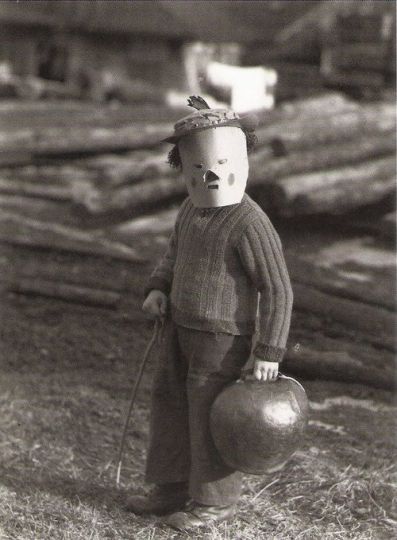
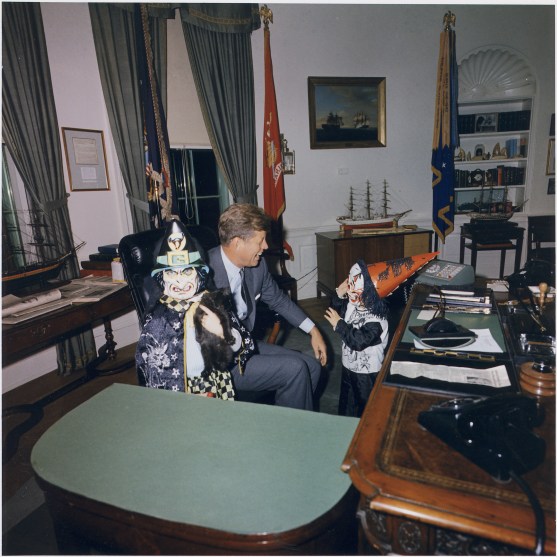
How the awesome power of highly caffeinated coffee may continue to shape Union soldiers’ Afterlives.

On a chilly, drizzly day in March 2018, my lifelong boon companion Julie and her daughter, my honorary niece, joined me for a day trip to Gettysburg. My niece had never visited the town or battlefield before. In addition to seeing the historical sites, she was keen to undertake some EVP/ITC recording with her “Weird Aunt,” as I’m known to her circle. That day, we combined the driving tour and the ghost hunting, practicing what I call a “drive-by”—rolling the vehicle to a stop, lowering the window, turning on an iPad ghost box app and digital recorder, and inviting anyone present to speak.
(Electronic voice phenomenon, or EVPs, are recorded human voices that appear with no explanation across the spectrum of audiovisual technologies. The messages are often evidential, personal, and thought-provoking. Instrumental Transcommunication, or ITC, uses various forms of electronic devices, such as the so-called ghost box, to generate white noise or randomly generated phonemes from which it is theorized that spirits can shape speech.)
After purchasing an excellent driving tour CD with the marvelous Stephen Lang narrating, we set off, shortly reaching McPherson’s Ridge and the railway cut near the McPherson farmhouse, which saw heavy engagement during the first day of fighting. Before the battle, the area was excavated, but no rail tracks had been laid. This made a perfect spot for entrenchment by both sides as the battle lines shifted throughout the day.
When Hannah McCracken Kelly died in 1855, she left two small children who would retain no memory of her and possess no photographic image other than this postmortem daguerreotype.

Hannah B. McCracken was the daughter of John and Mary McCracken (or Mecracken), who farmed in Claysville, Washington County, Pennsylvania, during the early 19th Century. Named after the “Great Compromiser” U.S. Senator Henry Clay (1777-1852), the town is located on the line of the Cumberland Road which forms its Main Street. Claysville is 18 miles east of Wheeling, West Virginia, and 10 miles west of Washington, Pennsylvania. The town was laid out in 1817 and remained unincorporated until 1832.
John McCracken was born about 1795 in Pennsylvania and died 28 December, 1865, in Claysville. His wife, Mary, the daughter of Samuel Caldwell of Buffalo Township, was born in about 1797 and died 4 August, 1878. The couple married in Washington County on 30 December, 1820. They are buried together in the old Purviance Cemetery, Claysville.

Mr. Grumpy’s seething was replaced with grudging tolerance. He was still watching me, but if I played it cool, he would, too.

This Halloween, I will be the guest speaker of the Myersville-Wolfsville Area Historical Society, presenting on local ghosts and paranormal phenomenon. Whilst this part of Maryland is rich in folkloric creatures such as a flying monster called the Snallygaster, or the Veiled Lady—a sort of banshee who plagued the environs of South Mountain—neither these nor other similar tales are particularly believable or verifiable.
I will stretch as far afield as Antietam and Gettysburg for parts of my lecture, but one paranormal story, at least, will be from Myersville, and it is my own. I share it now knowing it could be as figmental as the ghostly forms that once circled above Frederick’s Rose Hill Manor, or the Christmas Eve Phantom Flutist of Emmitsburg, who purportedly plays, as he did in life, over his dead father’s grave.
The setting for this tale is the cemetery of St. Paul’s Lutheran Church, directly across Main Street from my home.
In a cornfield by the old Pry House in Keedysville, Maryland, the walls between September 1862 and today can sometimes grow thin.

On Tuesday, 16 September, 1862, farmer Phillip Pry, Jr., and his wife Elizabeth, née Cost, found that the Civil War was standing on their doorstep. Since the summer of 1844, the couple had dwelt happily in their imposing home, high on a hill, which Phillip and his brother Samuel had built on their father’s land. The road between Boonsboro and Sharpsburg ran along the foot of the hill, and as Philip and Elizabeth could see from their front porch, it had become an artery for the Confederate war machine. Soldiers in grey, wagons, armaments, ambulances, horses—for a day and night they moved past the Prys’ house in a kaleidoscope of pending misadventure.

The next day, the road was crammed with soldiers in blue trundling along with the Union Army’s horses, vehicles, and ordnance. They were headed to attack the Confederacy at Sharpsburg—a bloodbath now known as the Battle of Antietam. Shortly, the Prys’ home would be commandeered as a headquarters and a field hospital by no less than the flamboyant George Armstrong Custer. From that moment, the Prys’ bucolic life on the hill was over.
Every village has its quirky characters. My own, Myersville, Maryland, was once home to a cantankerous teacher, reverend, and still-breaker nicknamed “Buffalo Bill.”
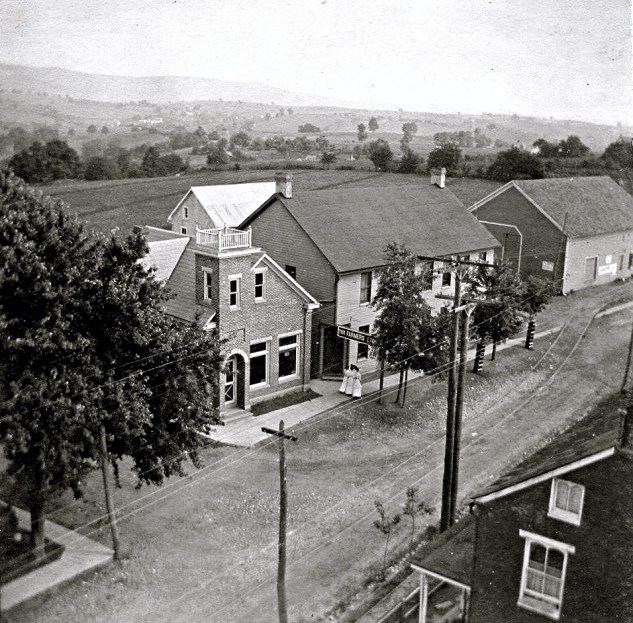
“Myersville—Emphasizing the need for lights in the streets of Myersville, there was a stoning encounter on Saturday night, when Robert J. Ridgely, a school teacher at Burkittsville and a resident of Myersville, was stoned by four or five young men of the town. Reports have it that Mr. Ridgely stoned back, but as the teacher could not be located this morning, this could not be verified.

Mr. Ridgley has an ugly cut over one eye, which bled profusely, and Wilber Shepley, one of those in the in the party stoning Mr. Ridgley, also has a cut, probably inflicted by a stone, although one report has it that Mr. Shepley sustained the cut by striking a telephone pole, while running.
“The stoning incident has aroused a number of people in the town, and it is stated that there is a stronger sentiment for electric lights, many residents claiming the affair would not have happened had the town been well lighted.”
The victim in this article, Robert Johnson Ridgley was born in Myersville in January 1867 to William Worth Ridgley (1822-1901) and his wife Martha Matilda Johnson (1834-1920). (Note: The family name is spelled variously as Ridgely, Ridgeley, and Ridgley. For consistency only, I am using the latter.) William Ridgley was well-known in the area for his success as a farmer although he was blind. His tenacity and determination were inherited by his son.
As an adult, Robert Ridgley received a scholarship from the Maryland State Normal School in Baltimore, later rechristened Towson University, starting his studies in September 1895. Before that, he was a teacher at Loys Public School. After his father’s death, he lived with his mother and a servant, Susan Shank, the latter of whom worked for Ridgley until at least until 1940. Keeping a long-term, live-in servant of this type is a positive testimony to Ridgely’s character, which was sometimes maligned by his fellow Myersvillians.
Continue reading ““There Lived an Old Man in Our Little Place””
“Some of my best friends have told me that I need not expect to be happy anymore unless I would marry again and have advised me to do so.”

Myersville, July 10th, 1852
Dear Emeline,
I hope you will not think hard of me for thus approaching you so unexpectedly, as my mind has bin [sic] for some time a good deal taken up with you in regard to coming to see you in order to have some private conversations with you, not knowing at all whether my company would be agreeable or not, but take this plan of ascertaining something about the state of your mind.
Dear Emma, you are well acquainted with me and know all about my situation. You know that I have bin unfortunate in the loss of a very dear and kind companion, one in who my whole soul delighted to honor and respect. But she has gone I trust from a world of trouble and sorrow to one of happiness and joy, and I can have no more comfort nor consolation from her anymore, only with a firm hope and expectation of meeting her again in those blissful regions where parting shall be no more. I can do no more than to respect her memory, which I will ever do.
We read in the Bible that it is not good for man to be alone. I have realized that to be a very true saying indeed. I was once as happy as any person could be in the enjoyment in the company of my much-lamented Mary, but how different my case. With all I have I have no enjoyment & some of my best friends have told me that I need not expect to be happy anymore unless I would marry again and have advised me to do so, although I do not wish to do so for some time yet. But I have come to the conclusion to do so providing I can suit myself. I now feel like a lost sheep, lonely and without anyone to cheer me or comfort me, and if it was not for the comforts and the consolations of religion, I would often times have to despair in sorrow. But thanks be to God that he still comforts and consoles me. I find that I can never be happy again in this world without fixing my affection on one again in who I am satisfied will be a kind companion to me, and dear Emeline, you appear to the only one I can have any idea of going to see at the present and of fixing my affection upon.
 "Your Dying Charlotte"